

You're comparing survival packs for sale after seeing the same promise repeated across every product page: one bag for every emergency. The problem usually appears later, when a cut needs immediate treatment, a family needs water and sanitation supplies, or an evacuation pack proves too heavy to carry. A survival pack isn't useful because it looks complete. It's useful when its contents match the hazard, remain accessible under stress, and are maintained until the day they're needed.
The market has grown beyond a narrow survivalist niche. The survival kits market was estimated at $12.4 billion in 2025 and is projected to reach $23.1 billion by 2034, with roughly 7.2% annual growth over that forecast period, according to DataIntelo's survival kits market analysis. That growth gives buyers more choice, but it also makes disciplined selection more important. A medical kit, trauma kit, mobile go-bag, and home emergency cache solve different problems.
Table of Contents
- Why Most Survival Packs Fail When You Need Them
- Matching Your Pack to Your Specific Environment
- Analyzing the Anatomy of a High-Quality Survival Kit
- Essential Steps for Maintaining Your Emergency Supplies
- Navigating Price Ranges and Purchasing with Confidence
Why Most Survival Packs Fail When You Need Them
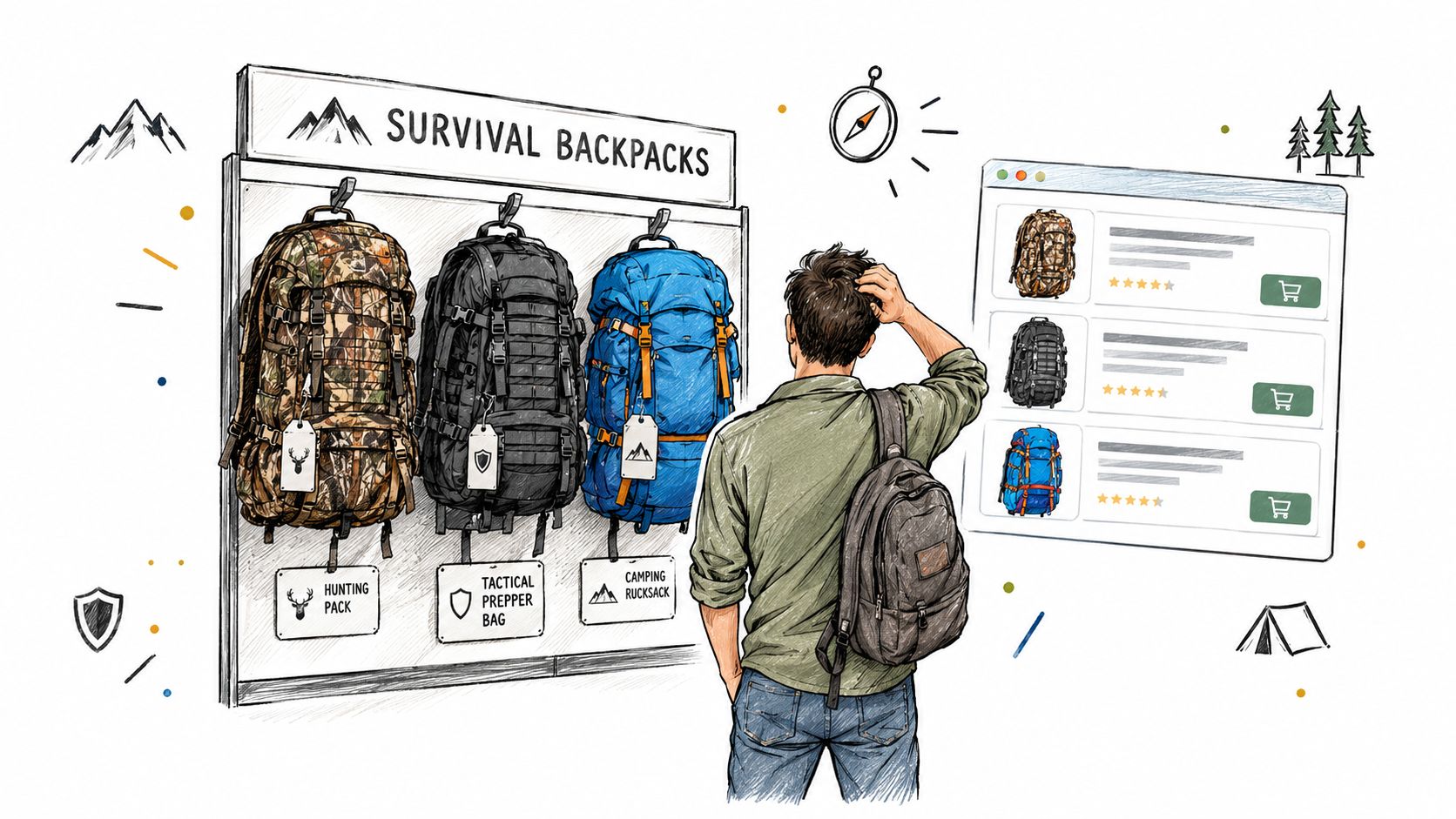
A buyer can spend an evening comparing survival packs for sale, choose the most impressive-looking backpack, and still end up with the wrong tool. The bag may contain a blanket, a whistle, a flashlight, snacks, and water treatment supplies, yet offer little practical help for a deep laceration, a blister that stops a hike, or a family sheltering without utilities.
The failure usually isn't dramatic at first. A hiker opens the bag after slipping on wet ground and finds gauze buried beneath fire starters. A driver discovers that batteries have leaked inside the flashlight compartment. A household keeps a large emergency pack in a closet because it's too awkward to move quickly. The kit existed, but it wasn't designed around the moment of use.
The three hidden tests
A reliable purchase has to pass three tests before its item count matters:
- Access: Can the user reach bleeding-control supplies without emptying the pack?
- Fit: Does the contents list reflect the activity, climate, group size, and likely injuries?
- Carryability: Will someone take the pack during a hurried departure?
Emergency Kits' product specifications
The last test is regularly ignored. Published kit specifications show how quickly weight rises. A one-person waist-pack kit can contain 20 items, measure 7H x 16W x 5.5D, and weigh 4.17 pounds, while a four-person deluxe backpack kit can contain 34 items and weigh 9.49 pounds. Larger four-person systems can reach 21 pounds or 34.5 pounds, depending on power, shelter, and medical modules.
That doesn't make a heavier kit automatically bad. A home cache can tolerate weight that would be unacceptable on a trail. The mistake is buying a stationary family supply system and expecting it to function as a mobile evacuation bag.
Practical rule: A pack that can't be reached, understood, or carried is not prepared equipment. It's stored clutter.
Marketing claims versus useful design
“Everything included” often means that a retailer has maximized visible contents rather than operational value. A cheap multitool may look attractive beside a fire striker, but it won't compensate for missing wound-care supplies, inaccessible medication, or an unsuitable water plan. A large item count also says nothing about expiration control, instructions, waterproofing, or replacement access.
The strongest buying decision starts with the emergency rather than the product name. A trail medical kit, a hunting trauma kit, and a hurricane home cache should be evaluated separately. The buyer's job is to reject the generic promise and identify the specific failure the pack must prevent.
Matching Your Pack to Your Specific Environment
A backpacker crossing remote terrain and a family preparing for a hurricane may both search for “survival,” but their packs solve different problems. The backpacker needs compact medical supplies that fit existing gear and remain reachable on the move. The household needs water, food, sanitation, lighting, communication, and organized storage. A whistle and thermal blanket may suit both. The rest should follow the setting.
Start by evaluating flood fire and drought, then convert those hazards into supplies, storage locations, and evacuation routes. Winnebago County's preparedness guide recommends easy-to-carry containers, accessible storage, annual checks, and supplies covering 3 to 14 days, depending on the plan.
Environmental Needs by Scenario
| Scenario | Primary Need | Critical Feature |
|---|---|---|
| Hiking and backpacking | Treating common trail injuries without unnecessary bulk | Lightweight, packable organization |
| Hunting | Managing severe bleeding and penetrating injuries until help arrives | Trauma-focused modules and rapid access |
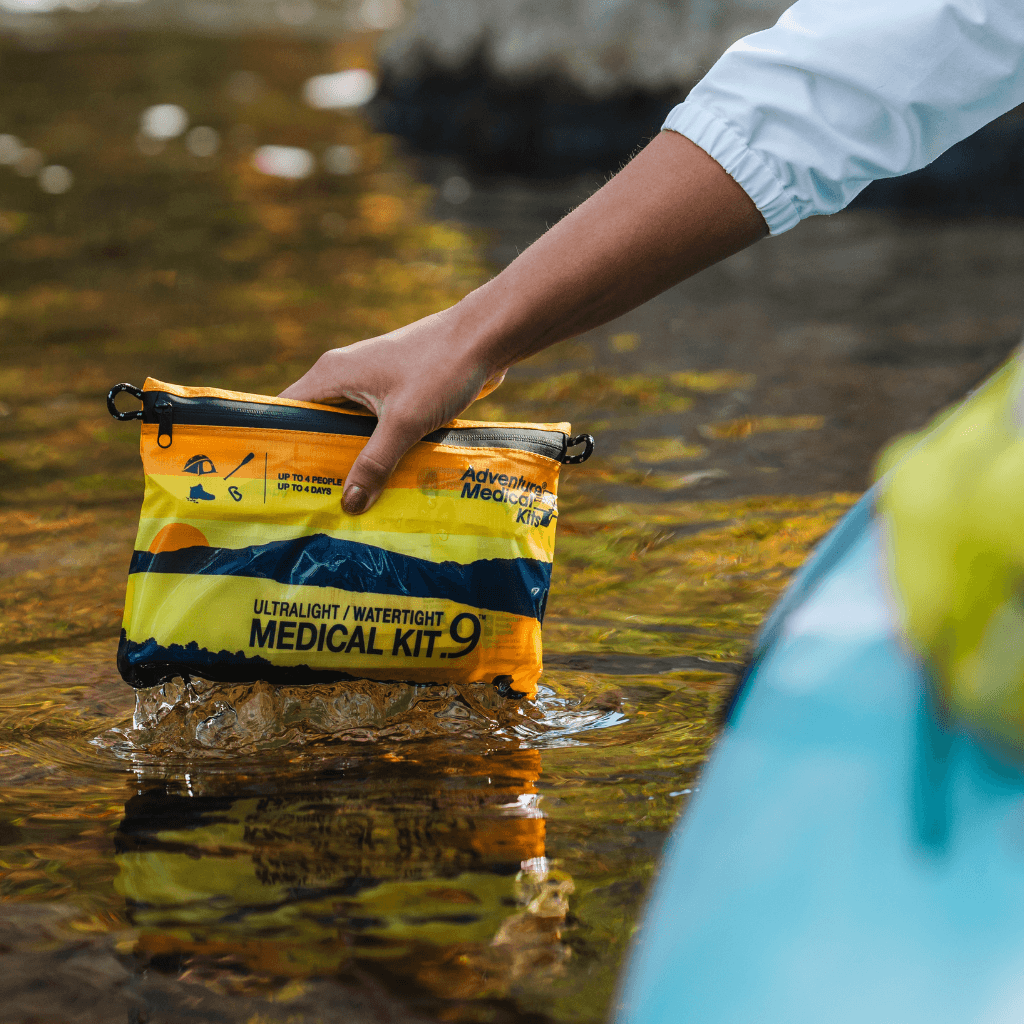
| Boating and paddling | Keeping medical supplies usable around water | Waterproof containment and durable closures |
| Vehicle emergency | Handling roadside injury, weather, and temporary isolation | Compact storage, lighting, communication, and visibility |
| Home disaster readiness | Supporting a household through disrupted services | Larger cache with water, food, sanitation, shelter, and power |
Pack placement matters as much as contents. A trail kit should be reachable without emptying the backpack, while a home cache can prioritize capacity and modular storage. For activity-specific planning, an emergency kit for camping helps separate routine outdoor injuries from broader disaster supplies. Every ounce added to a hiking kit should support mobility or treatment.
Medical, trauma, and general preparedness
Medical priority covers likely illness and injury, including cuts, blisters, burns, sprains, medication needs, and wound care. Organize these supplies for fast treatment. Extra survival gadgets should not displace items that address predictable problems.
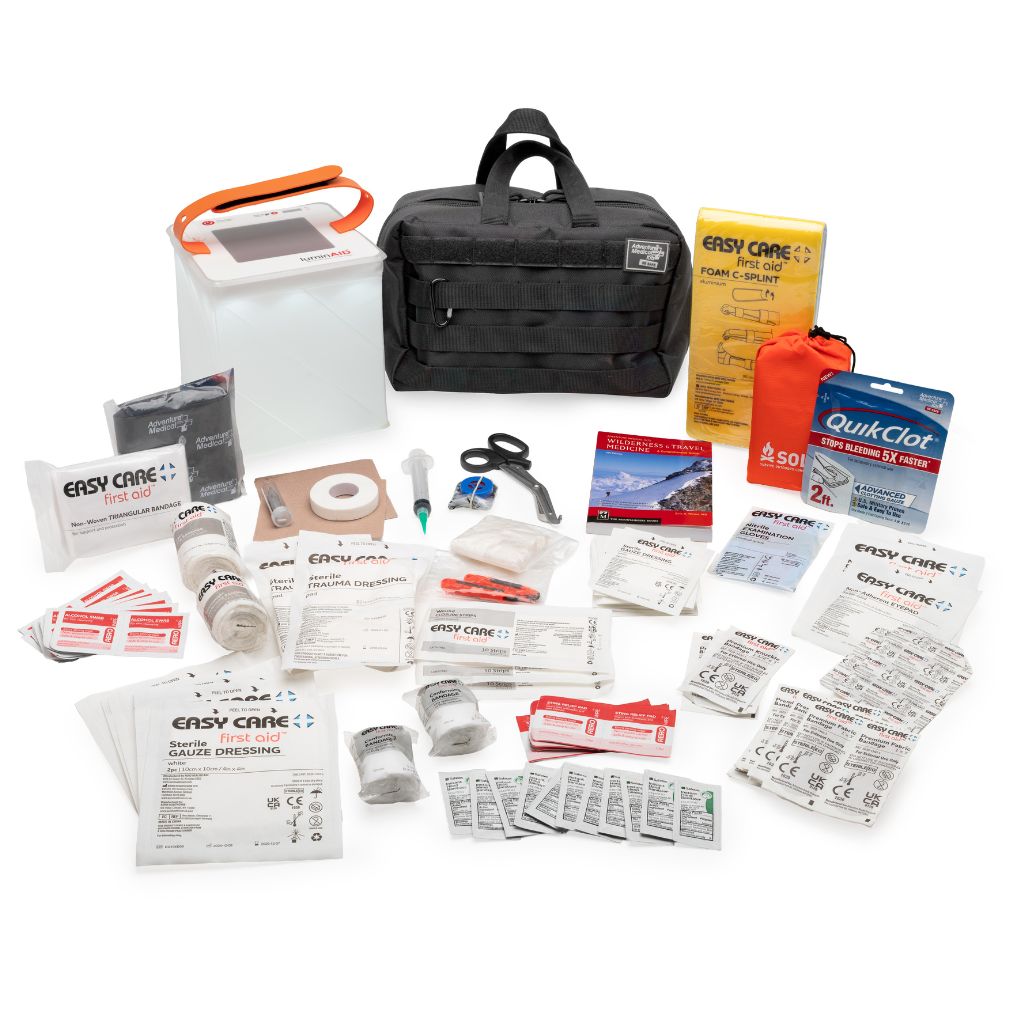
Trauma priority applies where delay could lead to catastrophic bleeding or airway compromise. Hunters and remote field teams may require a tourniquet, hemostatic dressing, pressure dressing, gloves, and a CPR barrier. Those tools matter only when the user knows how to apply them. The Bureau of Land Management groups backcountry first-aid supplies around rescuer protection, wound care, dental supplies, medical items, and environment-specific equipment. Its first-aid kit recommendations also advise reconsidering a trip if nobody has the skills to use the equipment. Training remains part of the kit.
General preparedness addresses prolonged service disruption. Public guidance commonly uses a three-day, or 72-hour, emergency supply standard, while retailer guidance summarizing Red Cross advice recommends a basic home kit covering 10 to 14 days, with 1 gallon of water per person per day. Those figures appear in REI's emergency preparedness guidance. A home cache and a mobile go-bag should therefore be selected as complementary systems, not interchangeable products.
Analyzing the Anatomy of a High-Quality Survival Kit
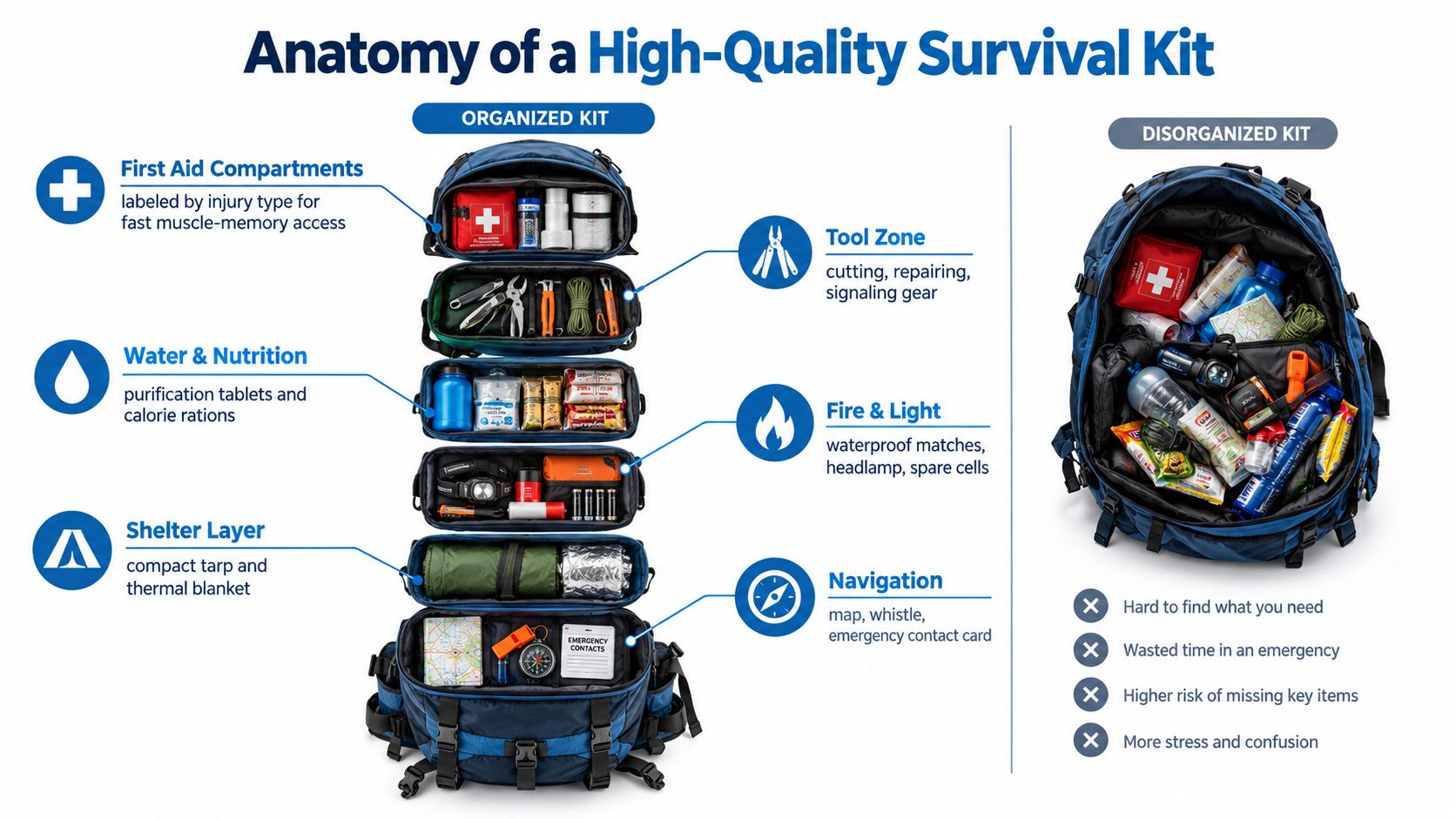
A good survival kit has an internal logic that remains understandable when the user is cold, tired, injured, or frightened. The contents should be grouped by action, not scattered according to package size. Clear labels reduce the time spent searching and help a second person locate supplies when the injured user can't manage the kit.
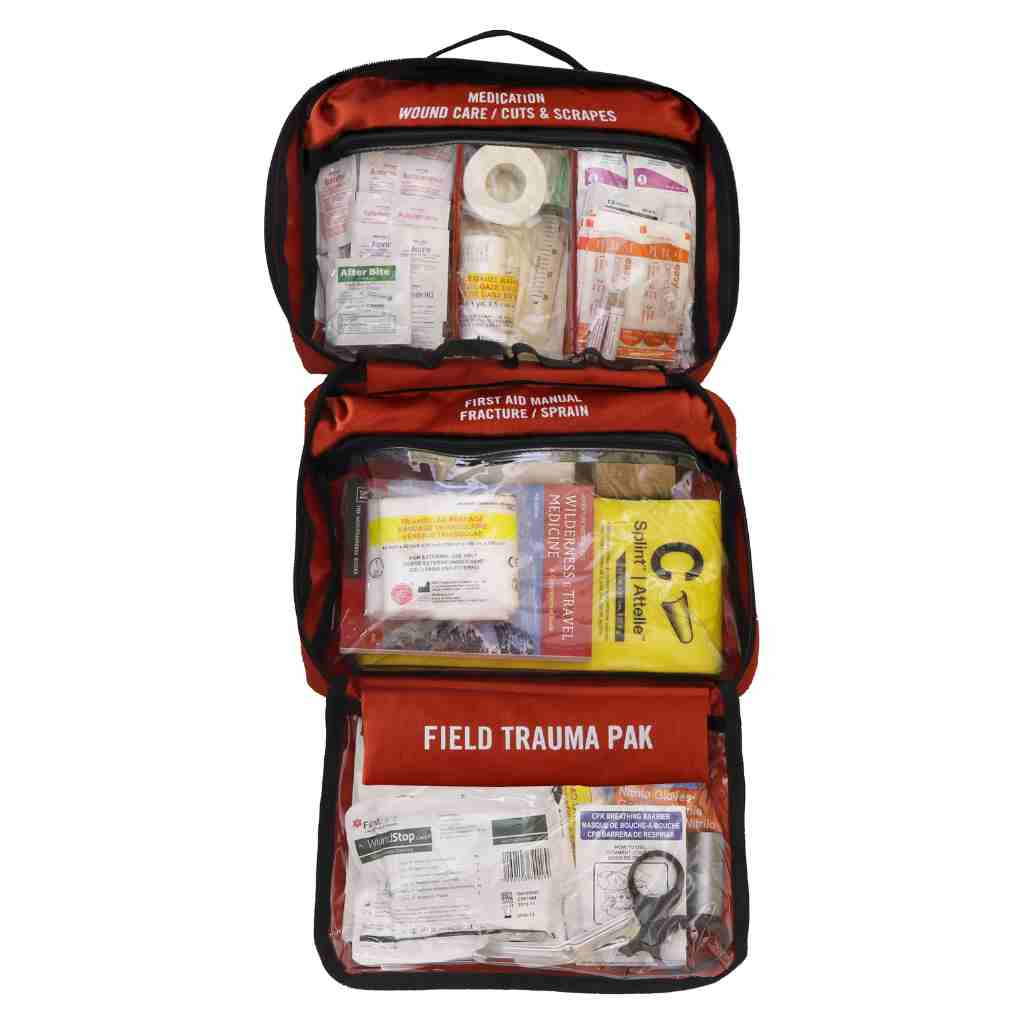
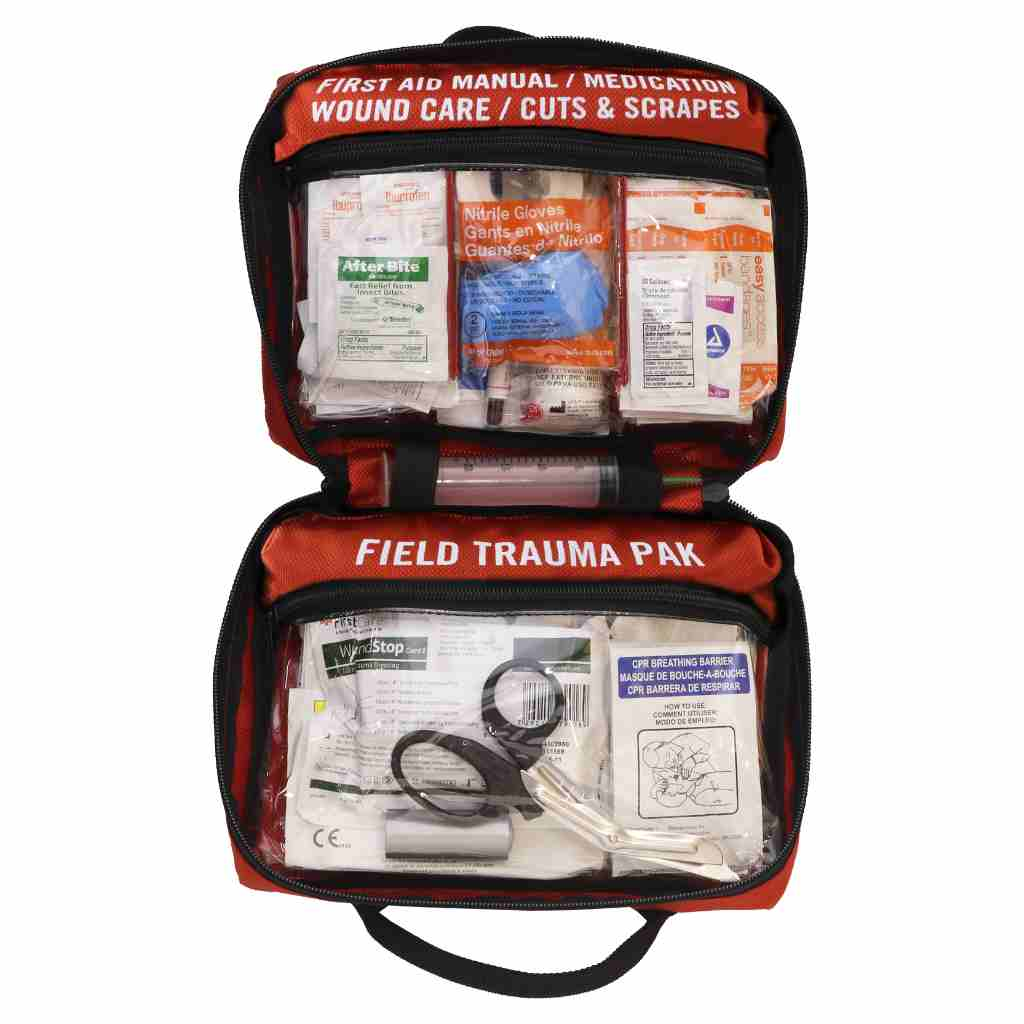
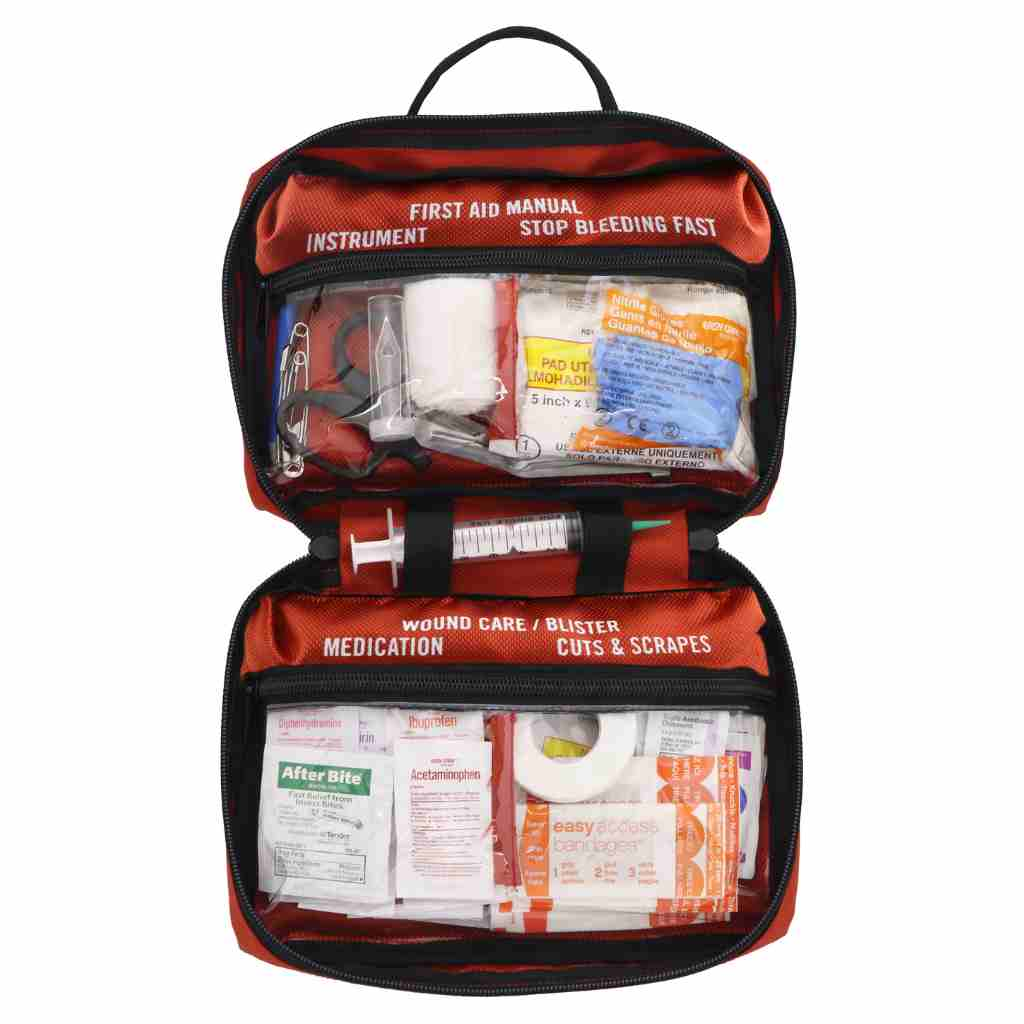
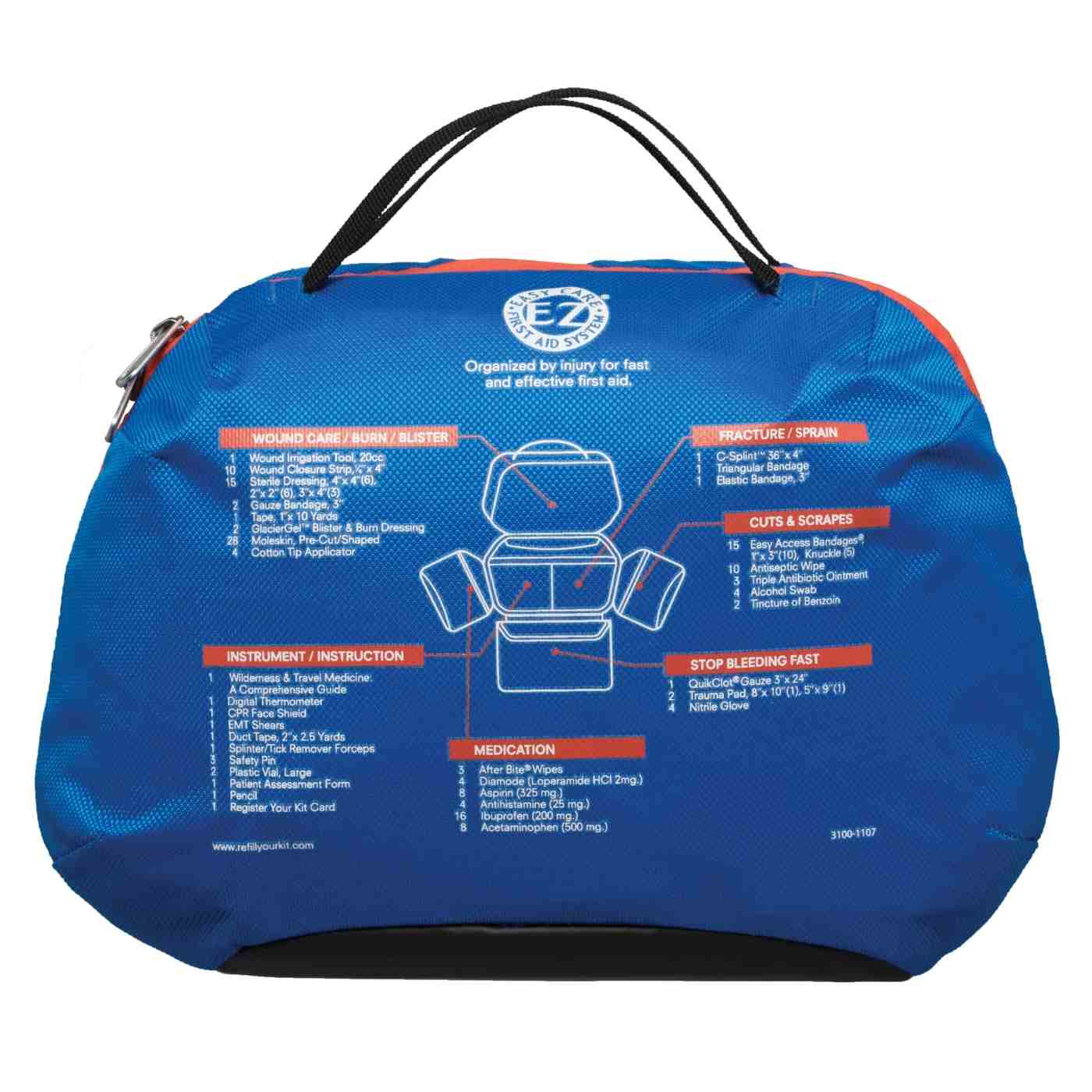
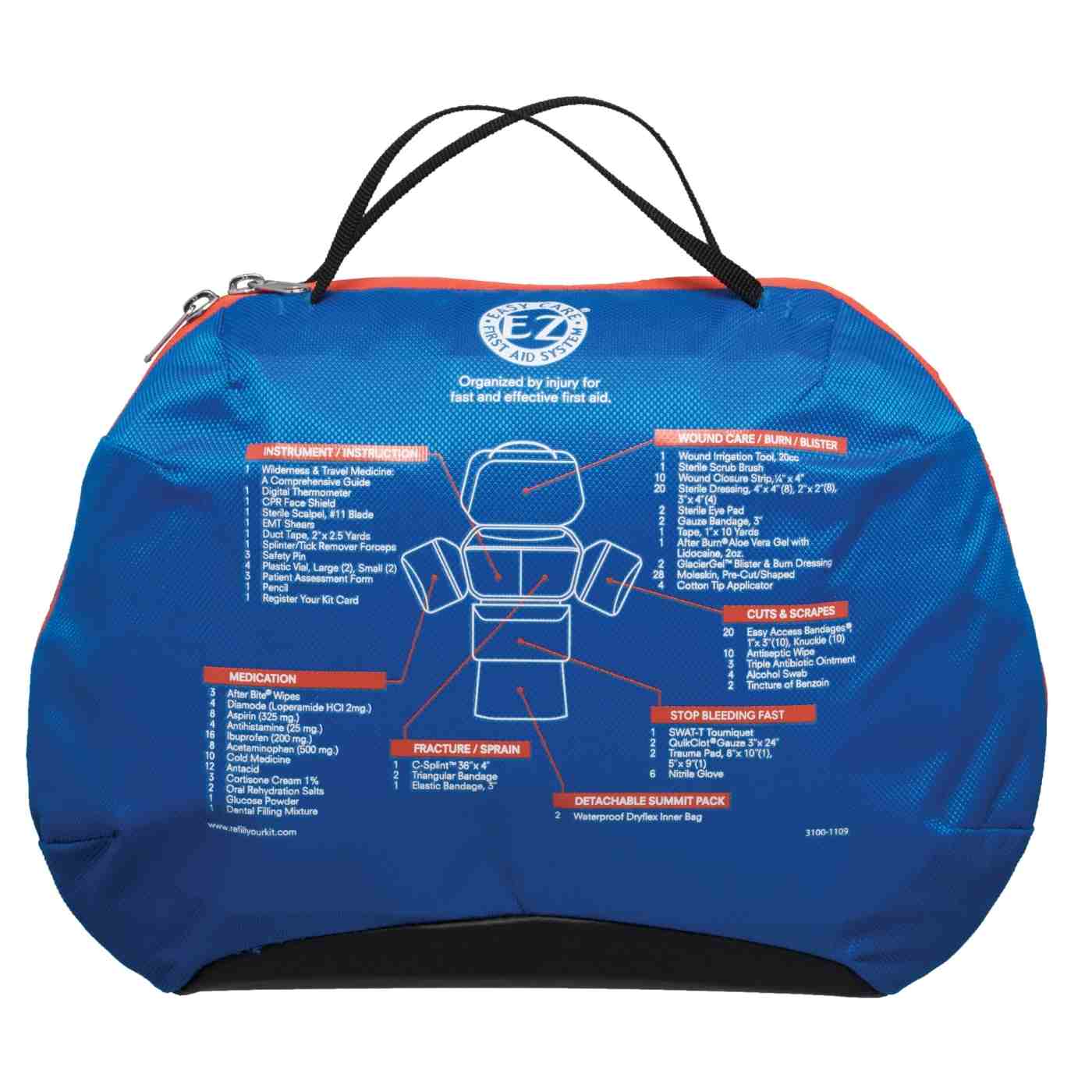
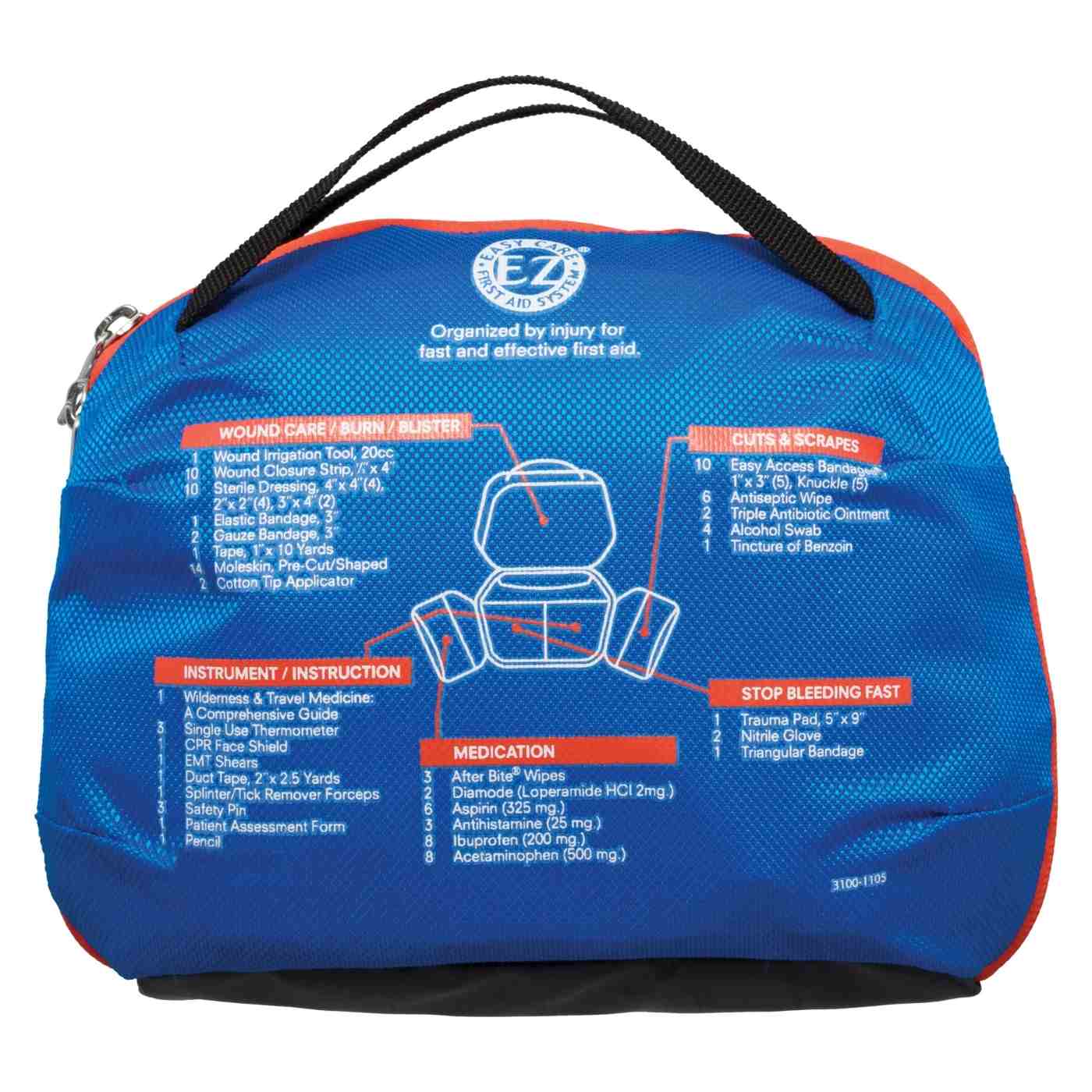
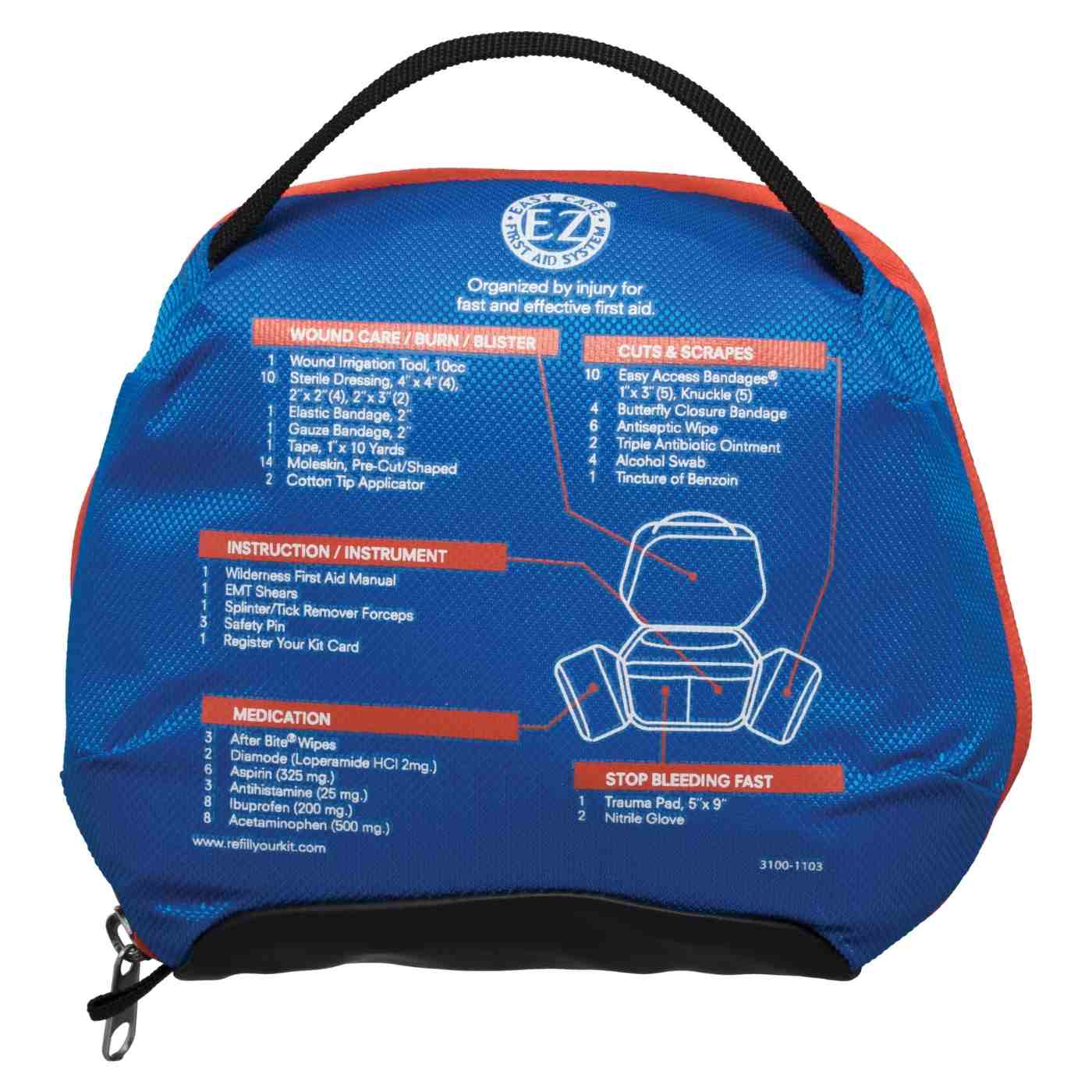
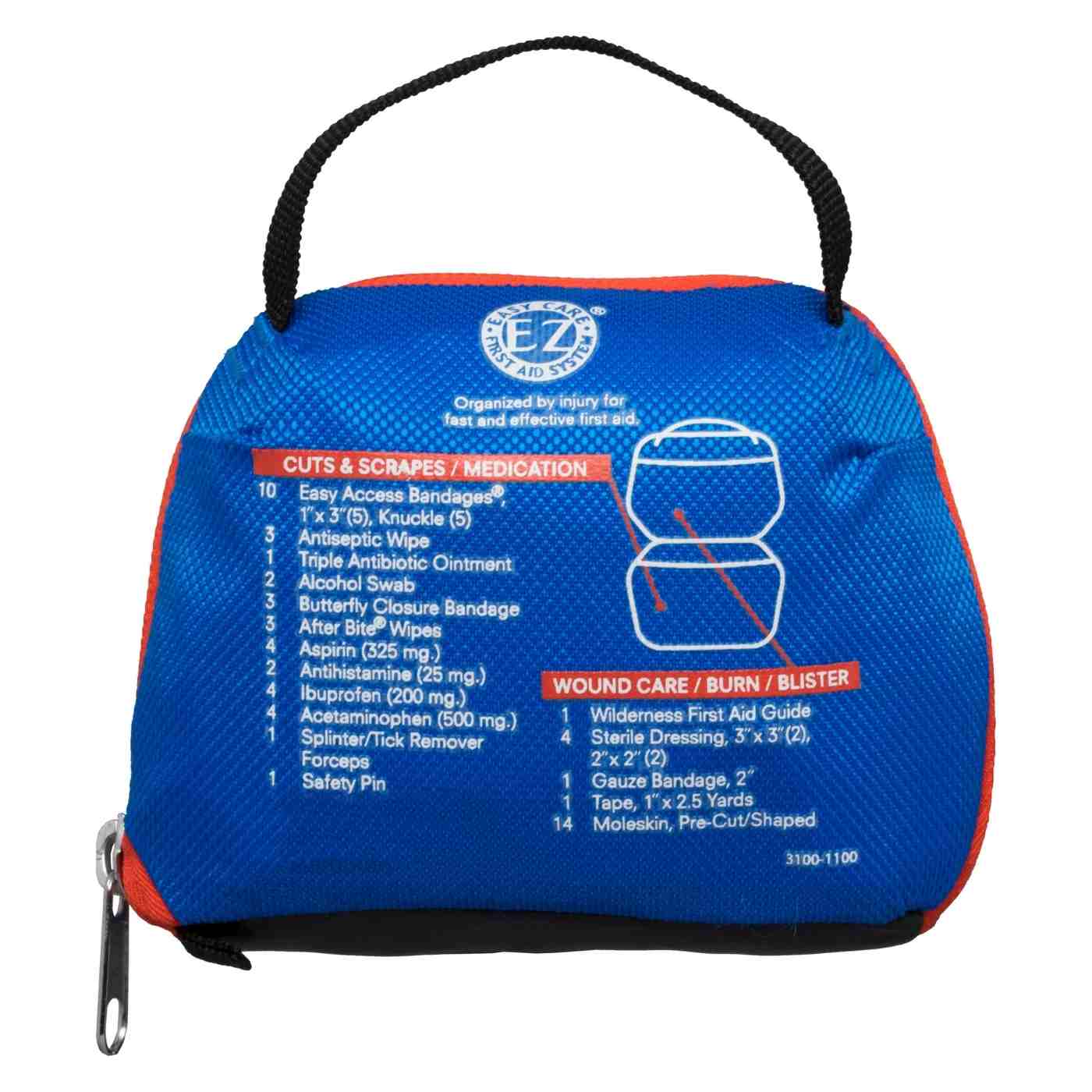
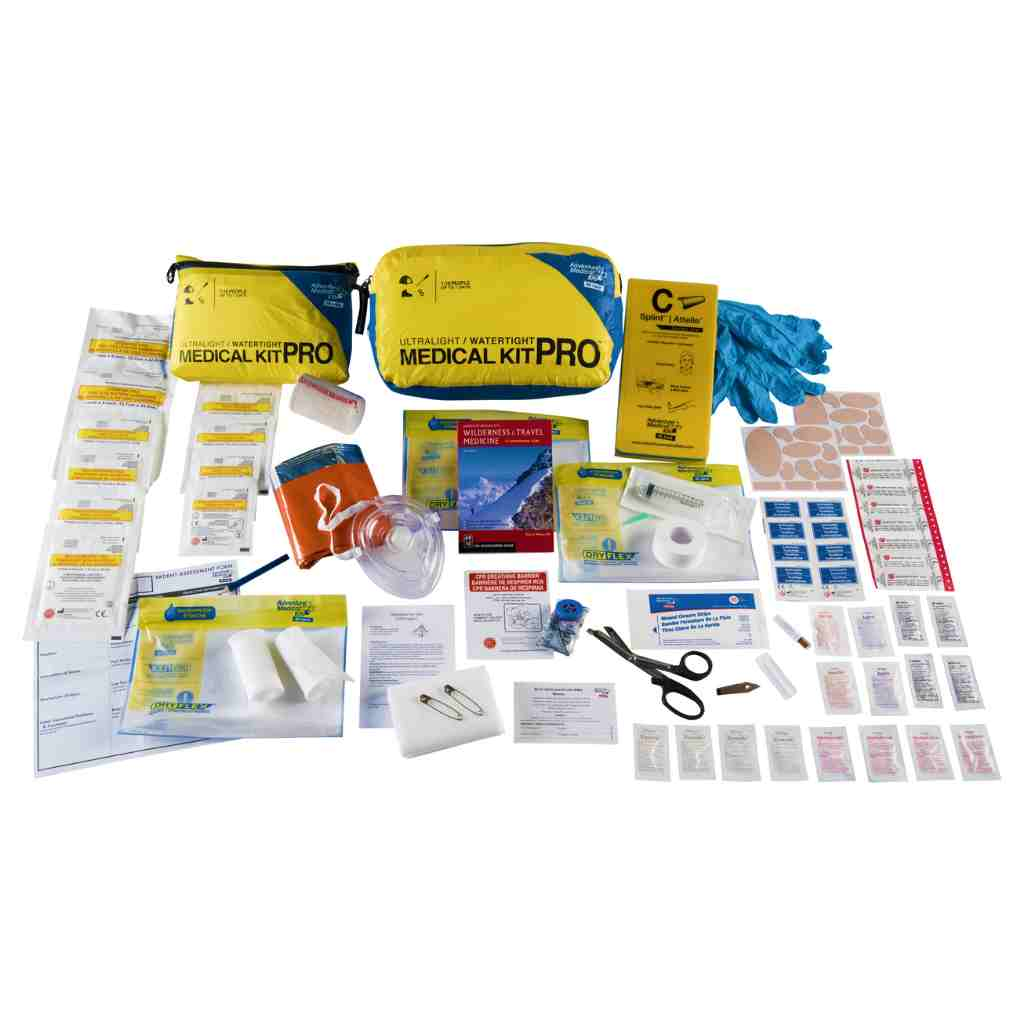
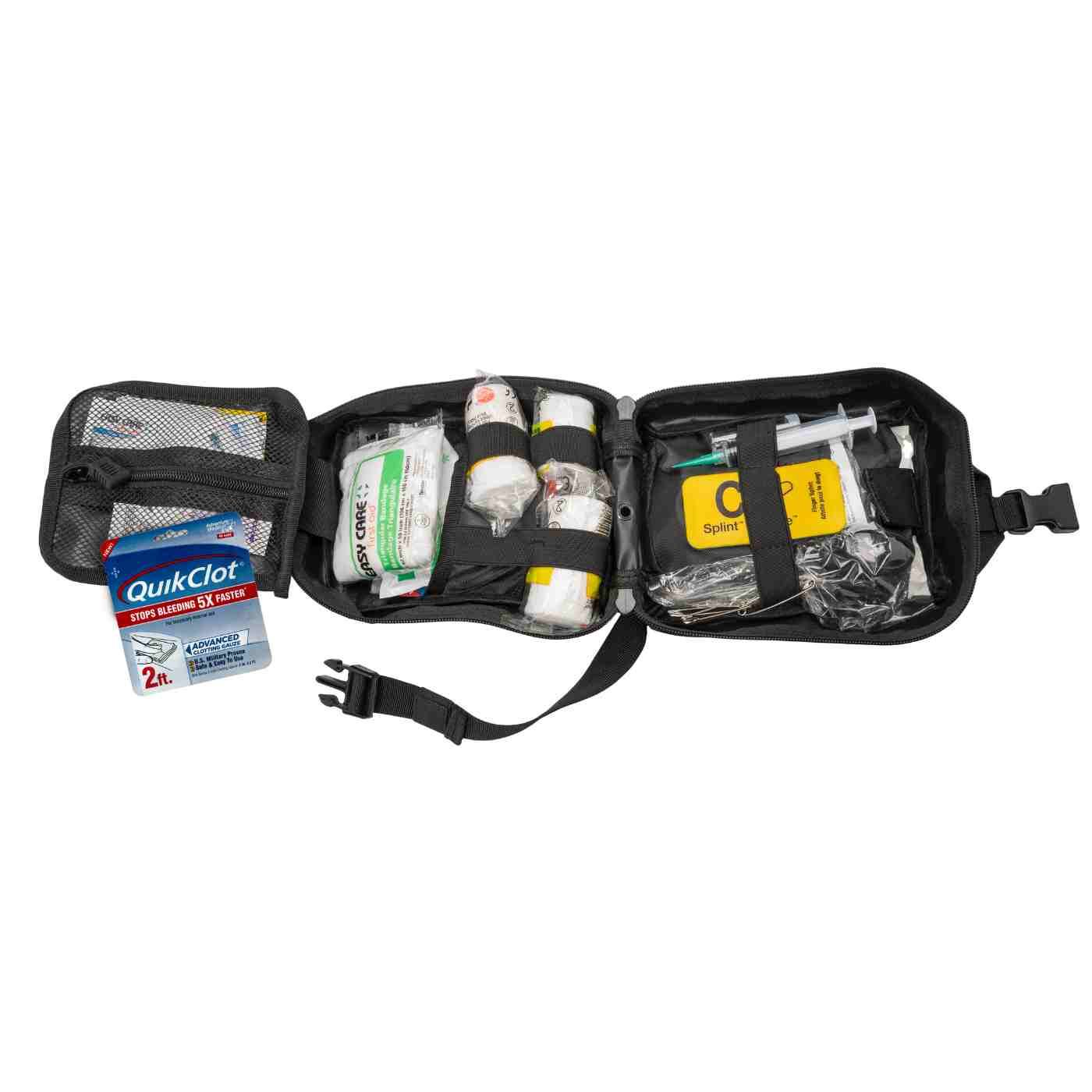
Outdoor first-aid organization provides a strong model. A Wirecutter review of outdoor first-aid kits describes a fold-out design with labeled pockets for Medication, Stop Bleeding Fast, Instruction/Instrument, Cuts & Scrapes, and Wound Care/Burn/Blister. That structure works because it matches the sequence of decisions people make in the field: identify the problem, reach the relevant supplies, and follow instructions without digging through unrelated gear.
What belongs in each zone
A practical pack separates medical access from general survival equipment. Bleeding-control supplies should not share a buried pocket with snacks or shelter fabric. Medication and instructions deserve a protected, clearly identified location, while tools, water treatment, lighting, and navigation should each have predictable homes.
A useful inspection follows this order:
- First aid: Look for injury-specific organization, wound-care materials, blister supplies, gloves, and accessible instructions.
- Trauma: Confirm whether the kit contains appropriate bleeding-control equipment for the scenario, and whether the user has trained with it.
- Water and nutrition: Separate treatment supplies from food, protect both from moisture, and verify that the plan matches the expected duration.
- Light and communication: Check the flashlight or headlamp, spare cells, whistle, radio, and charging options.
- Shelter and protection: Inspect thermal blankets, tarp components, weather protection, and any items needed to stay warm or dry.
- Navigation and identification: Include a map, compass, emergency contact card, and any location-specific information.
The types of medical kits resource helps buyers distinguish activity-specific medical kits from broader survival systems. That distinction prevents a common error, using a large general-purpose bag as a substitute for a compact medical kit that must be reached repeatedly during a trip.
Weight is an operational feature
Weight changes behavior. A waist pack may be appropriate for a single user who needs immediate access to basic medical supplies. A larger backpack can make sense for a household or remote expedition, but only when the contents justify the burden and the pack has a clear carrying role. A kit left in a vehicle or home cache should not be judged by hiking standards, while a backcountry kit should not be judged by how many supplies fit inside it.
Cyclists and day travelers can also benefit from a focused packing approach. Practical Rider 18 cycling gear advice reinforces the value of matching carried equipment to the activity rather than loading every possible contingency. The same principle applies here: organization, relevance, and carryability beat impressive clutter.
Essential Steps for Maintaining Your Emergency Supplies
Buying a survival pack creates a responsibility that many owners overlook. Supplies age, batteries corrode, seals deform, and the contents change as the household or activity changes. A kit that was suitable last year may no longer contain current medications, correct contact details, or enough supplies for the people relying on it.
A maintenance routine that works
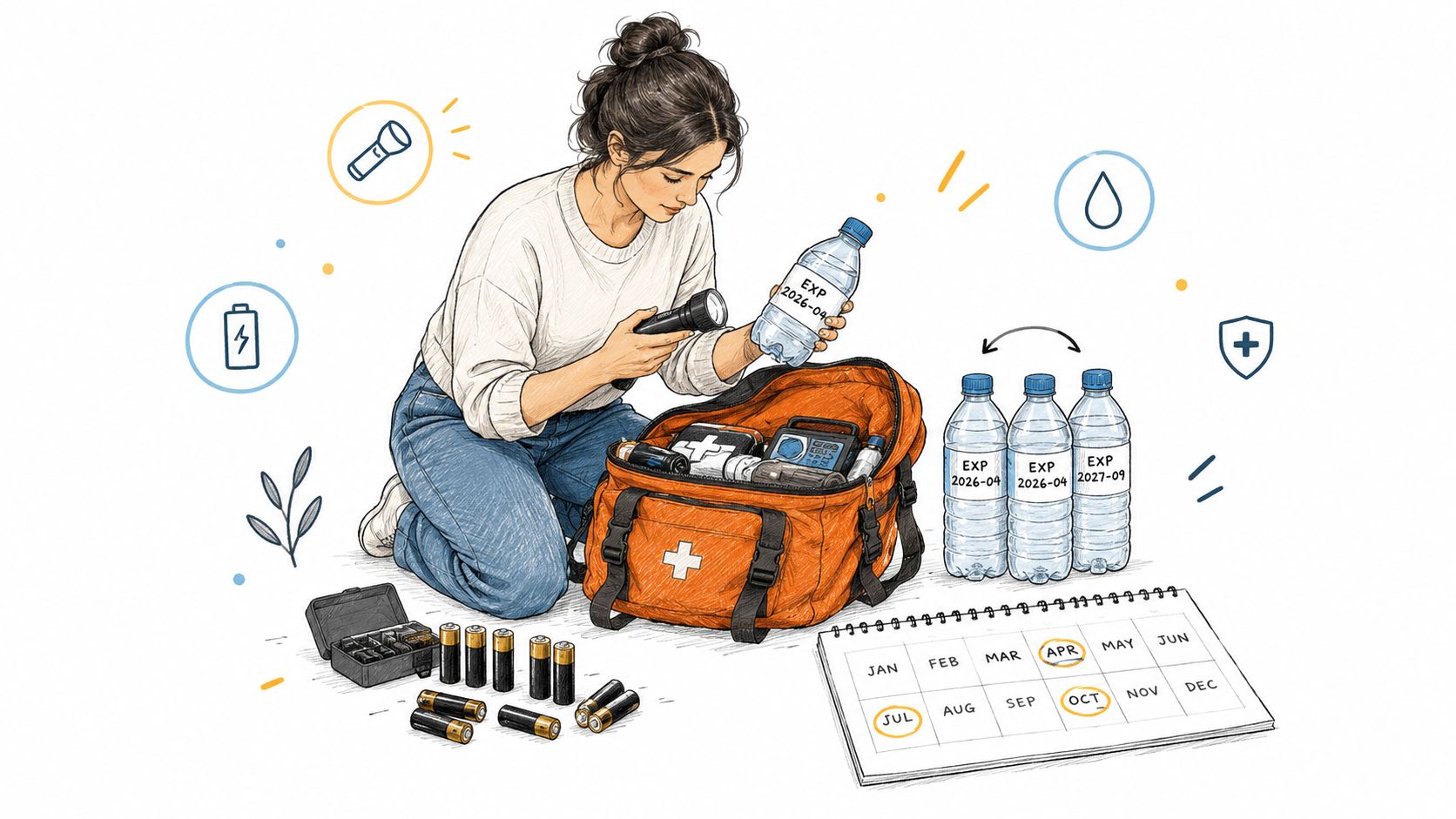
A seasonal calendar check is more reliable than memory. During each review, the owner should remove the contents, inspect individual packages, and confirm that the storage location remains accessible.
- Review expiration dates: Check medications, water-purification products, food, and any chemical supplies. Replace anything expired, damaged, or questionable.
- Test power equipment: Operate flashlights, headlamps, radios, and chargers. Rotate batteries before leakage damages contacts.
- Inspect waterproofing: Examine roll-top closures, resealable waterproof bags, zippers, seams, and fabric for cracking or contamination.
- Update household information: Replace outdated emergency contacts, prescriptions, medical details, maps, and access instructions.
- Repack by priority: Put bleeding-control and urgent medical supplies where they can be reached first, followed by routine care and general survival equipment.
The emergency preparedness checklist can support a structured review, especially for households managing several storage points. A home cache may remain in one location, while a mobile pack belongs near an exit, in a vehicle, or with the equipment used for the relevant activity.
After every use: Treat training as real use. Replace consumed dressings, used medications, discharged batteries, and opened packaging before the pack returns to storage.
Maintenance also includes skill practice. An instruction handbook is valuable because people don't memorize every treatment step, but written guidance works best when users already know where supplies are stored and what each item is designed to do. The Bureau of Land Management's caution about skills and equipment applies broadly: a tourniquet, pressure dressing, or splint belongs in a plan that includes training, not as a decorative feature.
A short review video can help households establish a repeatable process. It should supplement, not replace, the physical inspection of every pouch and seal.
Navigating Price Ranges and Purchasing with Confidence
Price comparisons are useful only after the buyer defines the job. A low-cost basic kit may be adequate for a drawer, glove compartment, or simple household starting point, but it may lack specialized trauma supplies, durable construction, or meaningful organization. A mid-range outdoor medical kit can make more sense for hikers who need activity-specific contents, waterproof packing, and instructions. Premium systems earn their place when a remote group, vehicle, or household needs a broader combination of medical, shelter, power, water, and communication equipment.
The survival kits market data shows that basic kits held 42.5% of market share and emergency-preparedness use cases held 38.6% in the cited market breakdown, while North America accounted for about 36.3% of global revenue and Europe about 24.7% in 2025, according to DataIntelo's market report. Those figures indicate broad demand for straightforward preparedness products, but they don't prove that a basic kit fits a particular buyer. Market popularity is not a substitute for a hazard assessment.
A purchase validation checklist
Before paying for any pack, the buyer should ask:
- What emergency is this designed to handle? A medical kit, trauma kit, and home cache shouldn't be judged by the same checklist.
- Can the user reach the urgent supplies immediately? Look for labeled compartments, a visible supply list, and a layout that separates bleeding control from general gear.
- Does the pack match the environment? Trail use favors lightweight packability, while boating demands reliable waterproof containment and home storage favors capacity.
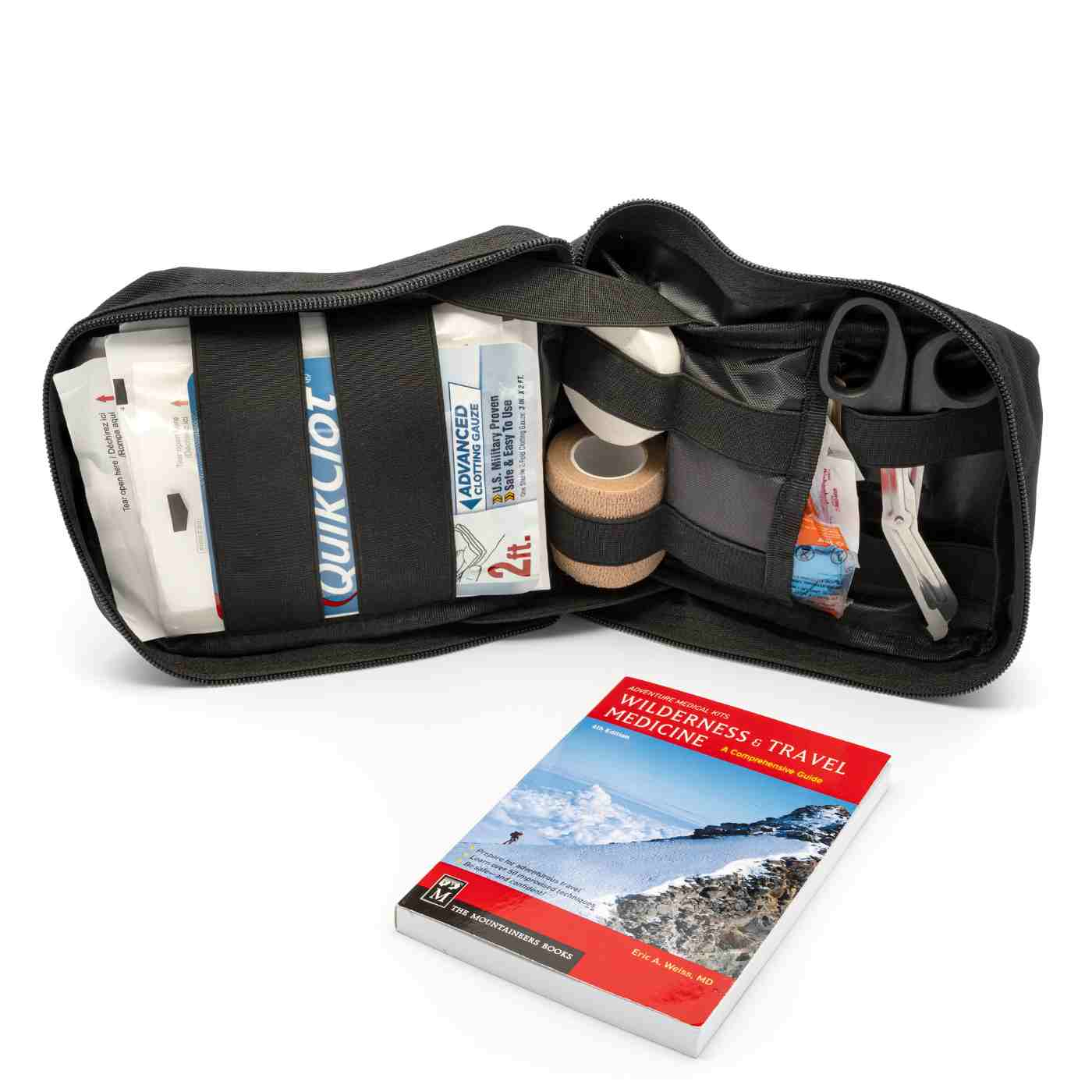
- Are instructions included? A handbook can guide treatment of common injuries and illnesses, but it doesn't replace training.
- Will the contents stay usable? Waterproof bags, durable closures, protected medication, and replaceable components matter more than visual bulk.
- Can the owner maintain it? A kit without an expiration review plan will gradually become less dependable.
- Is the carrying method realistic? A pack that stays behind during evacuation has failed its primary operational test.
- Can the product be expanded intelligently? Modular systems let users add supplies for a specific group, trip, or hazard instead of carrying irrelevant contents everywhere.
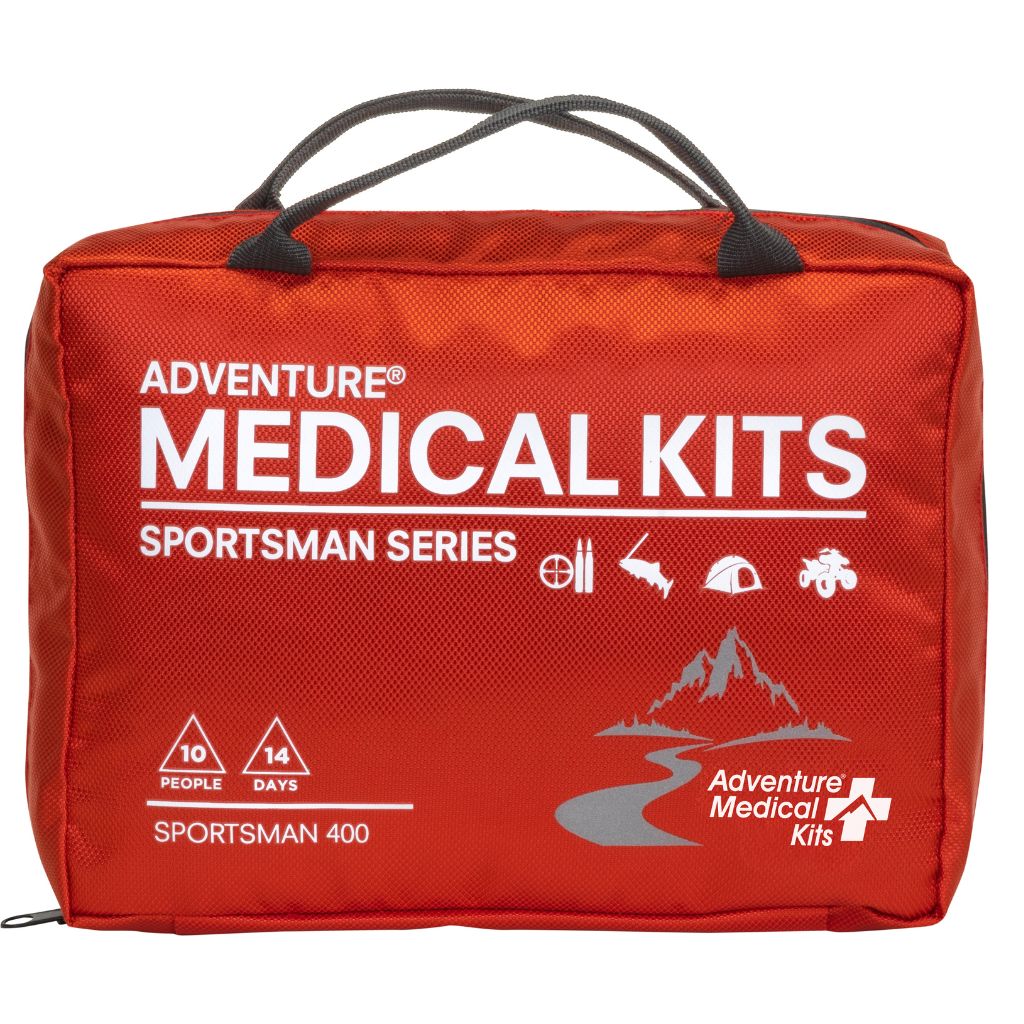
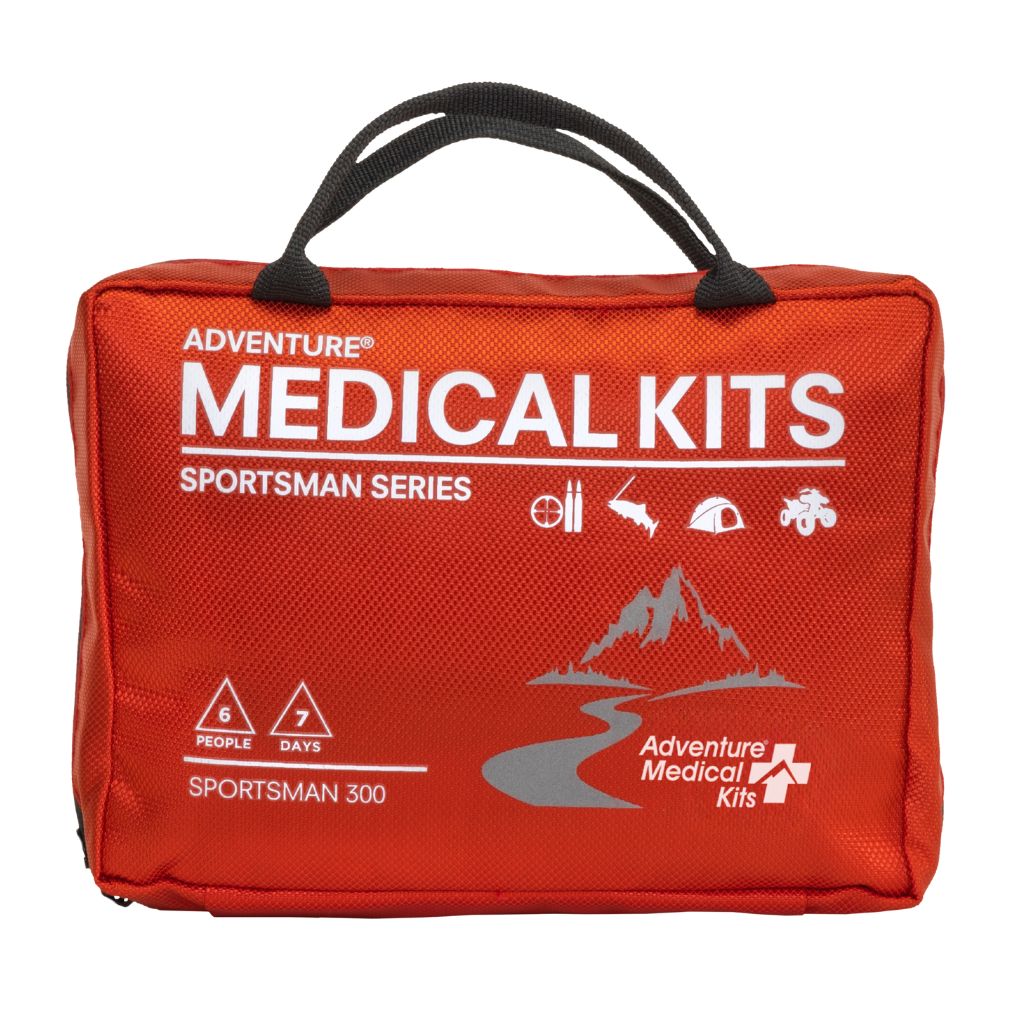
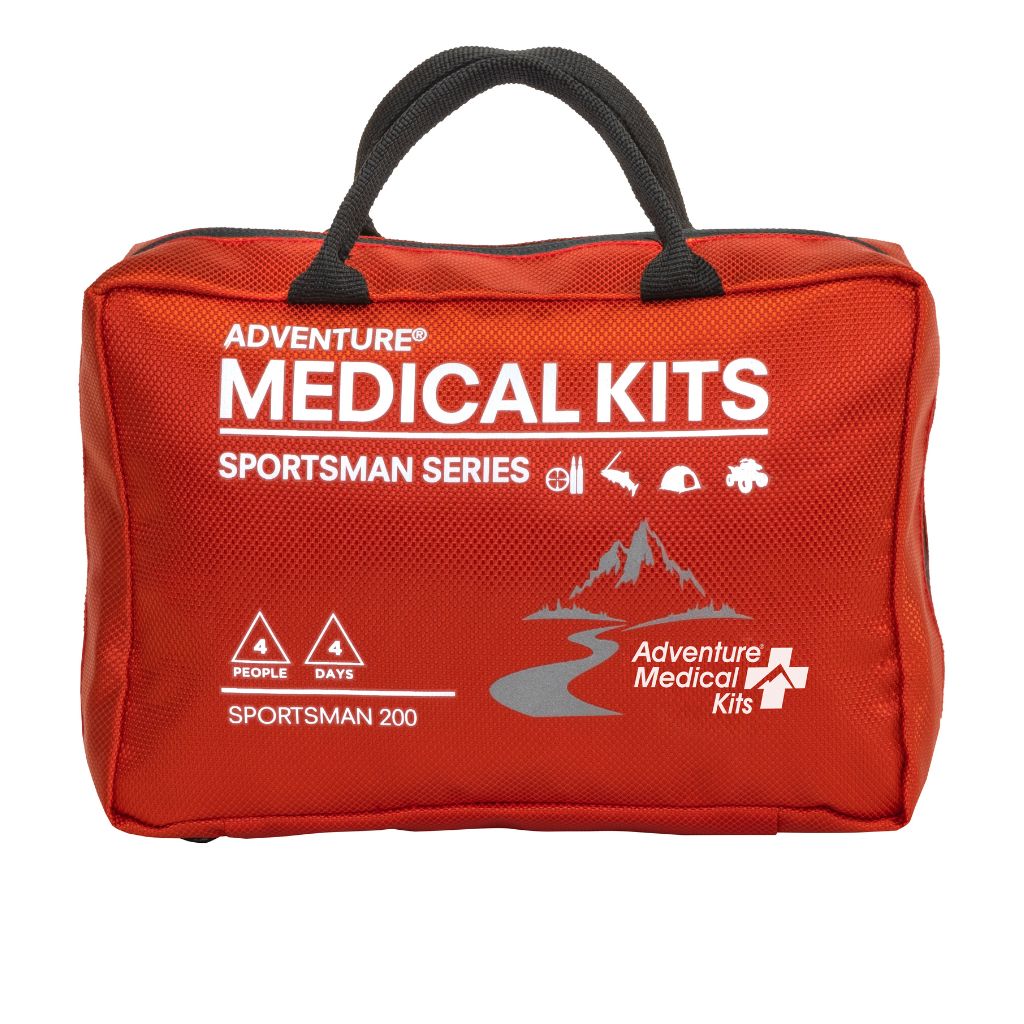
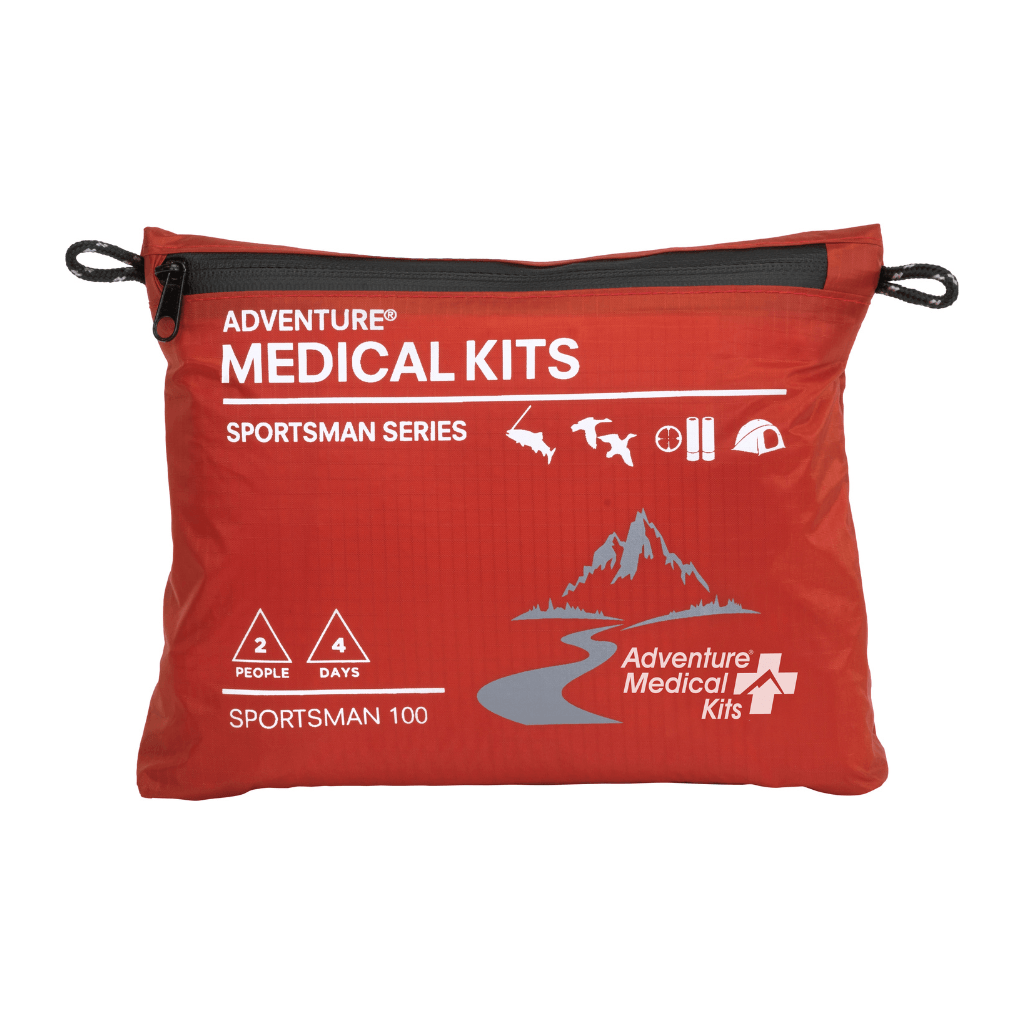
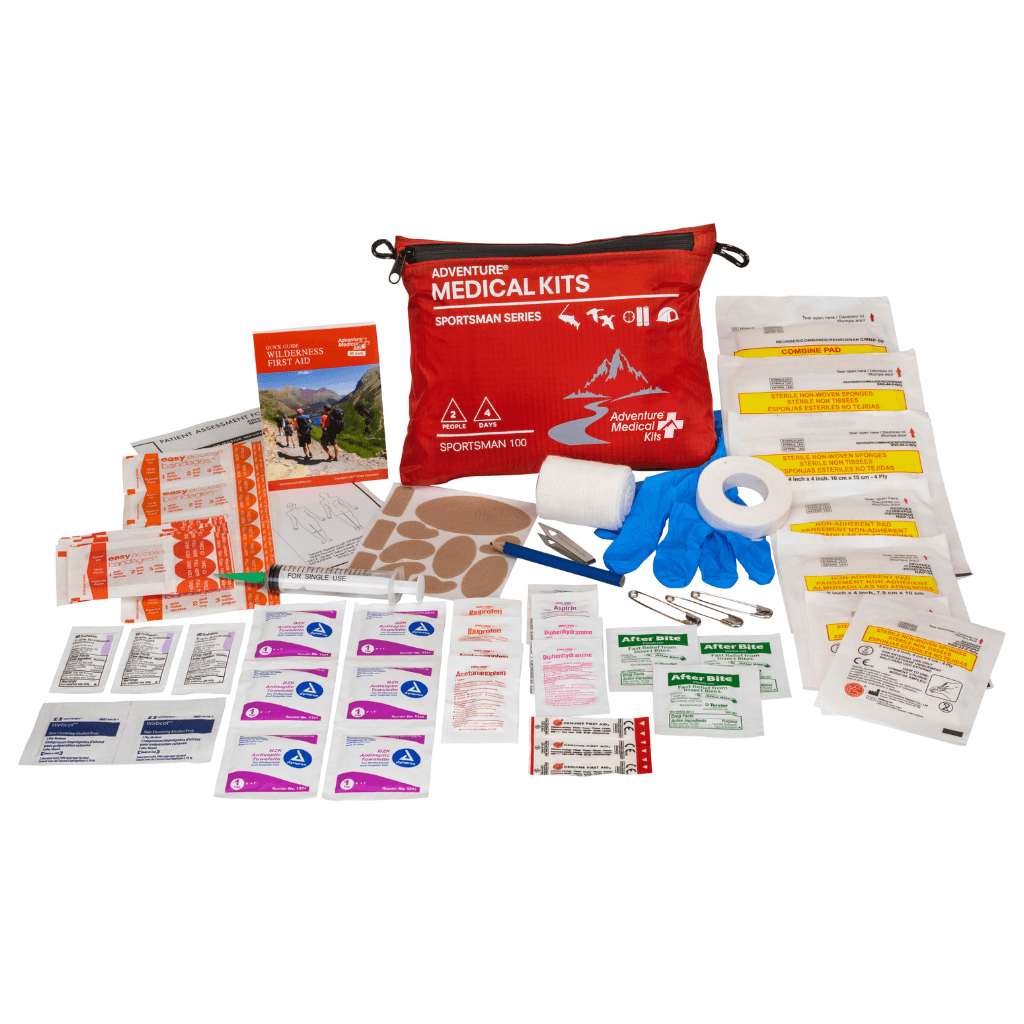
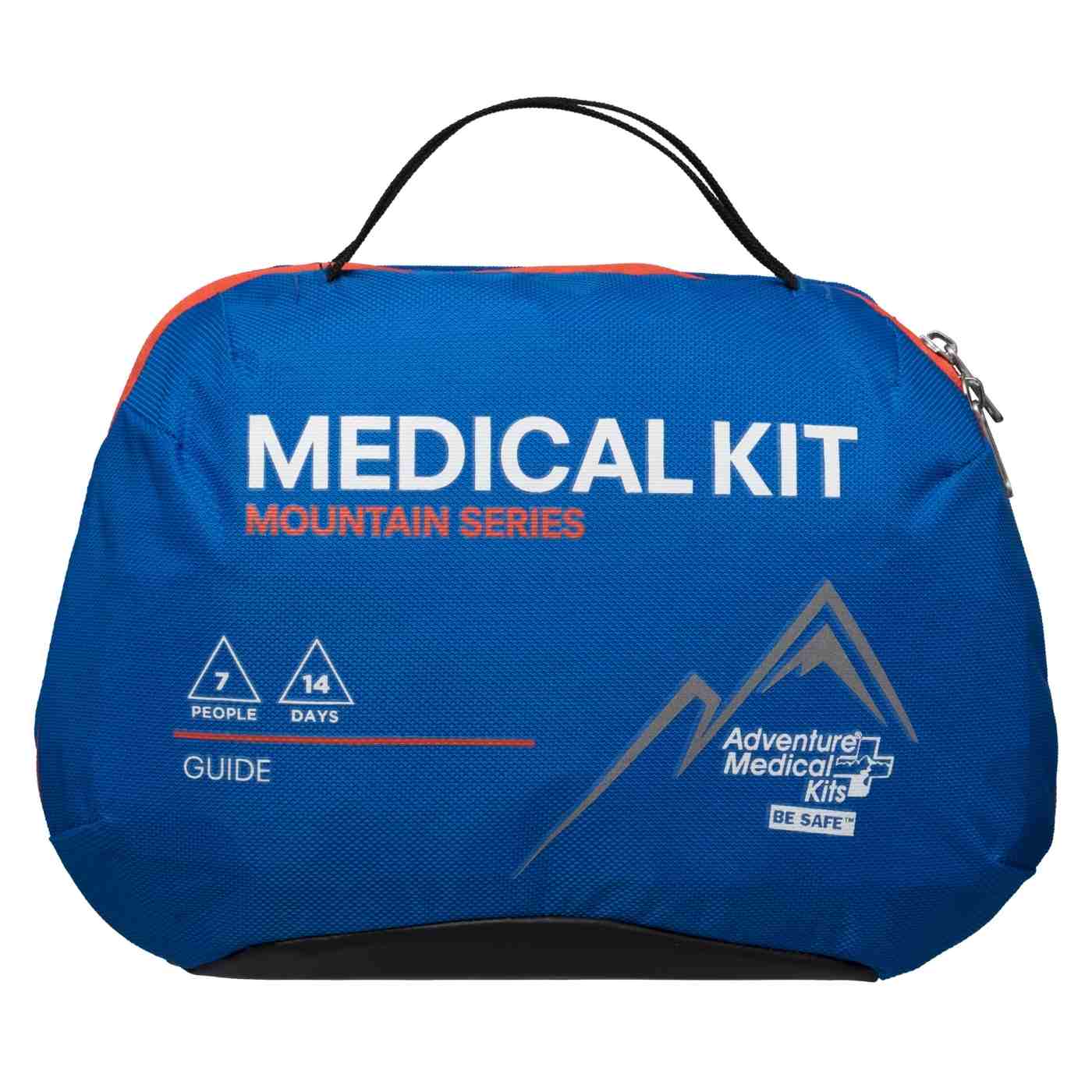
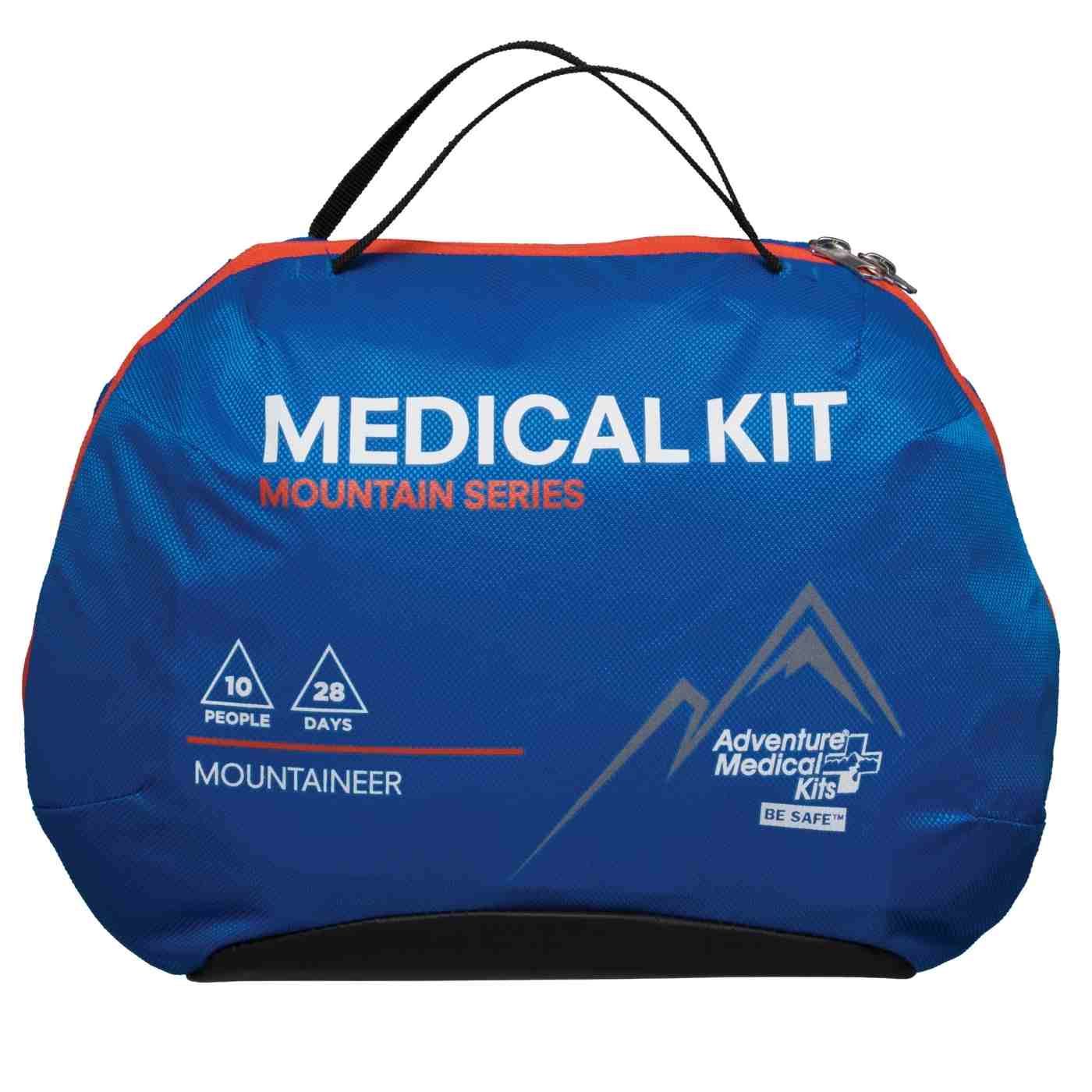
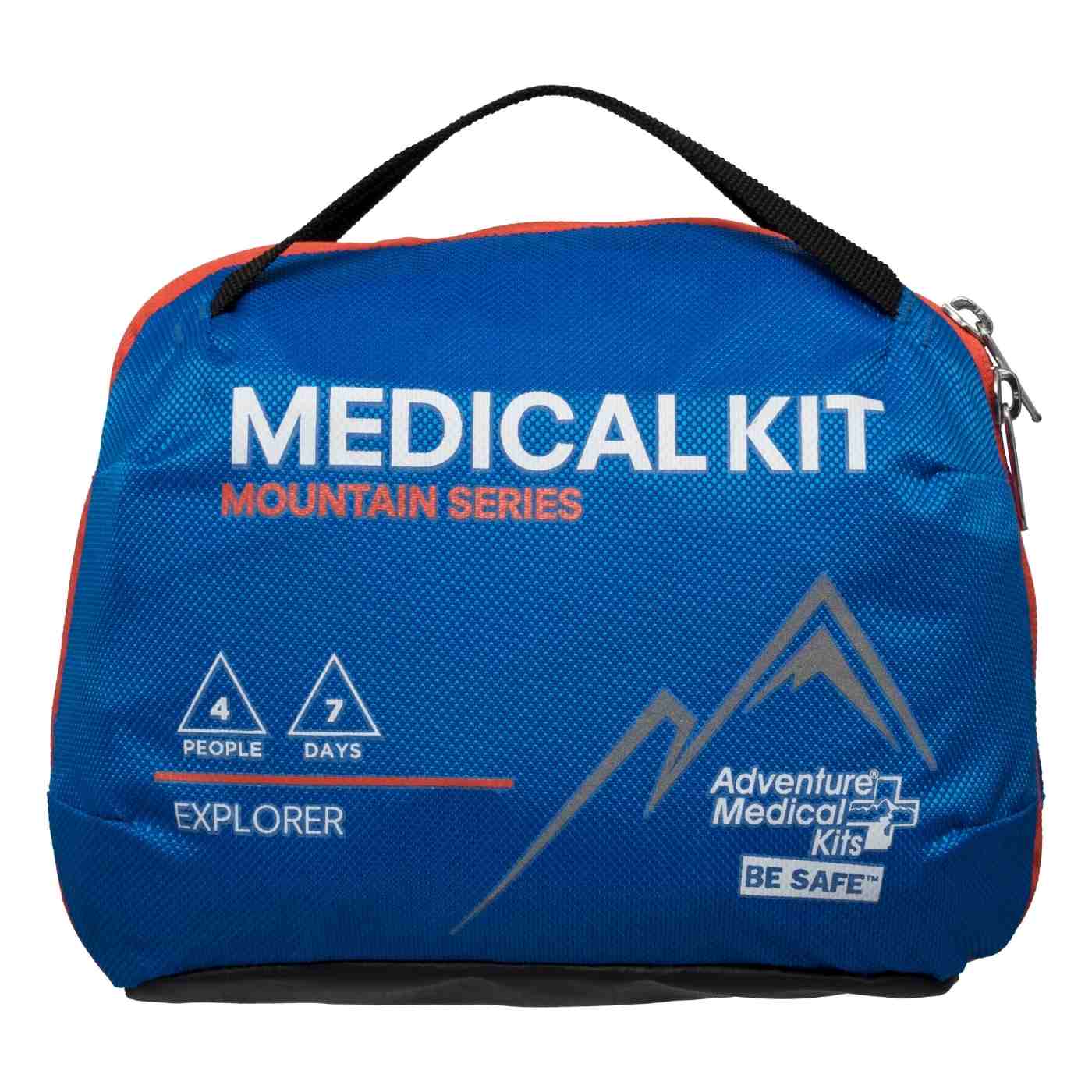
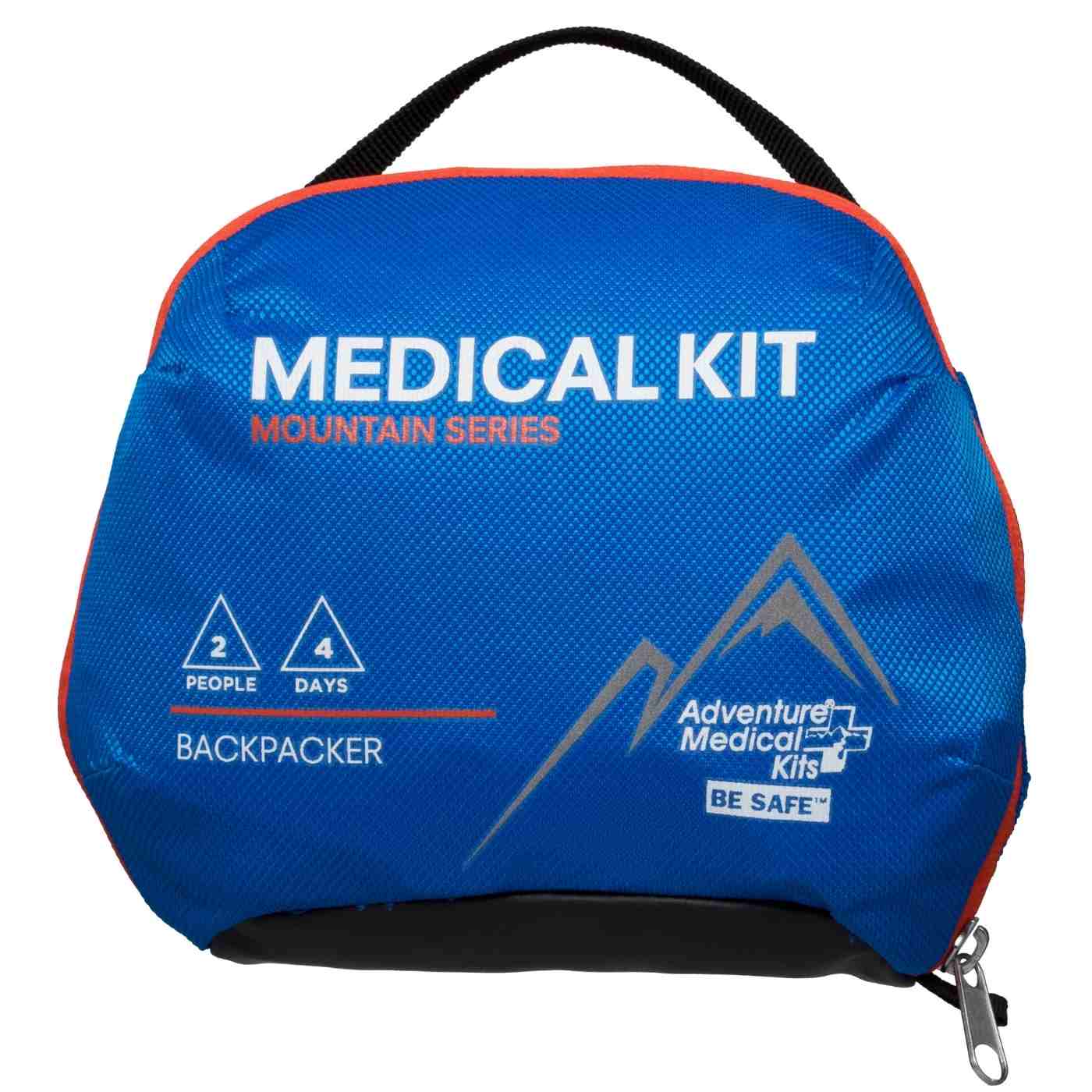
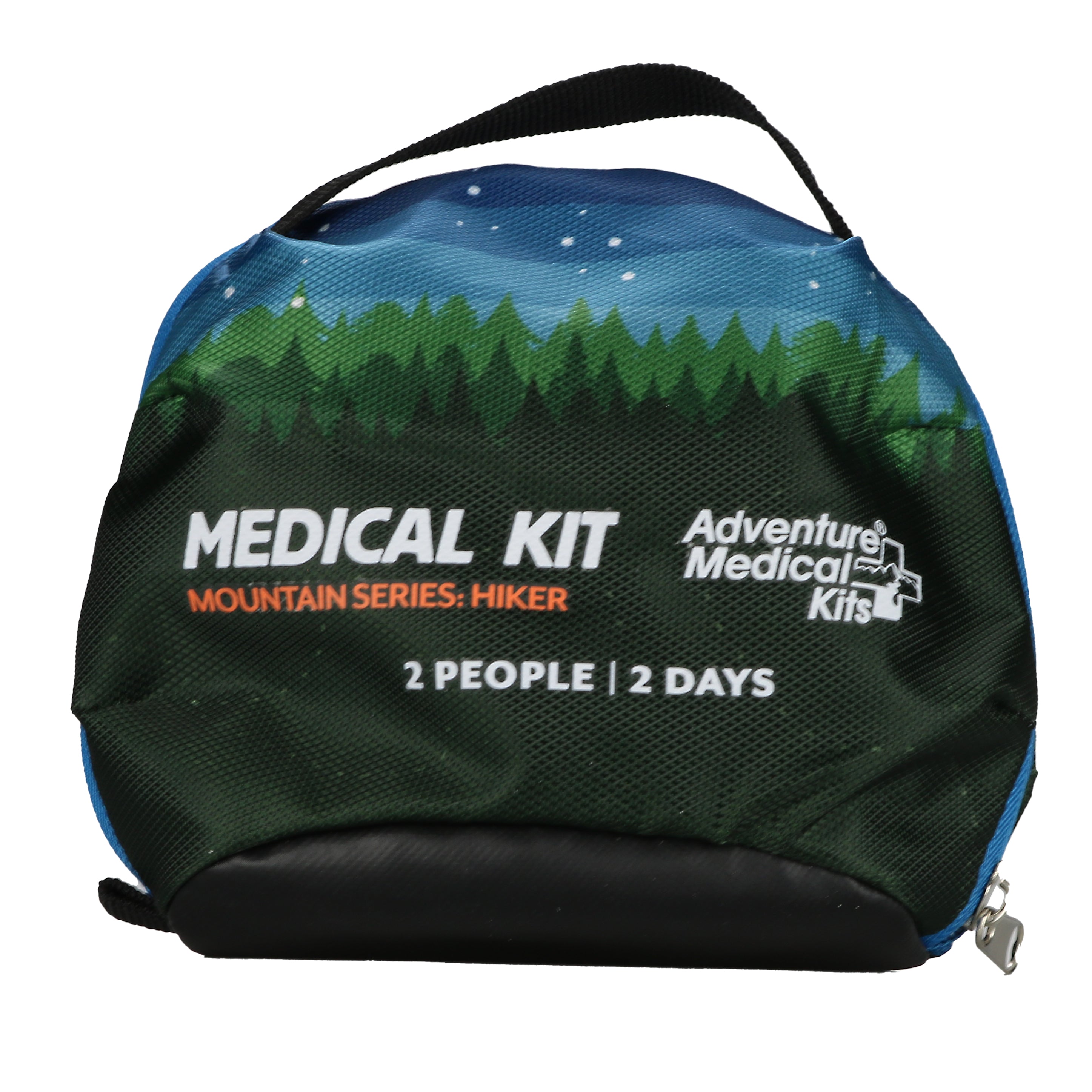
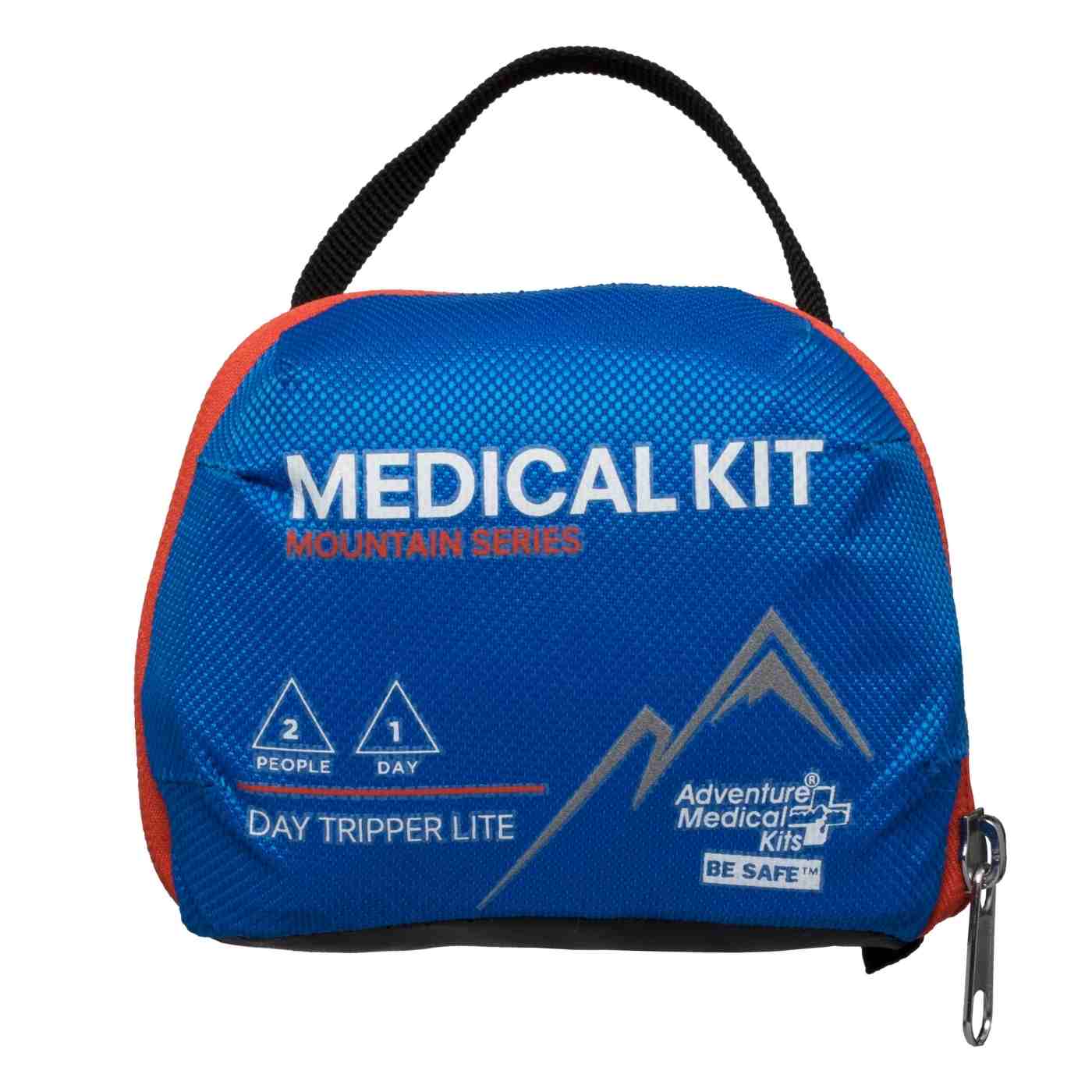
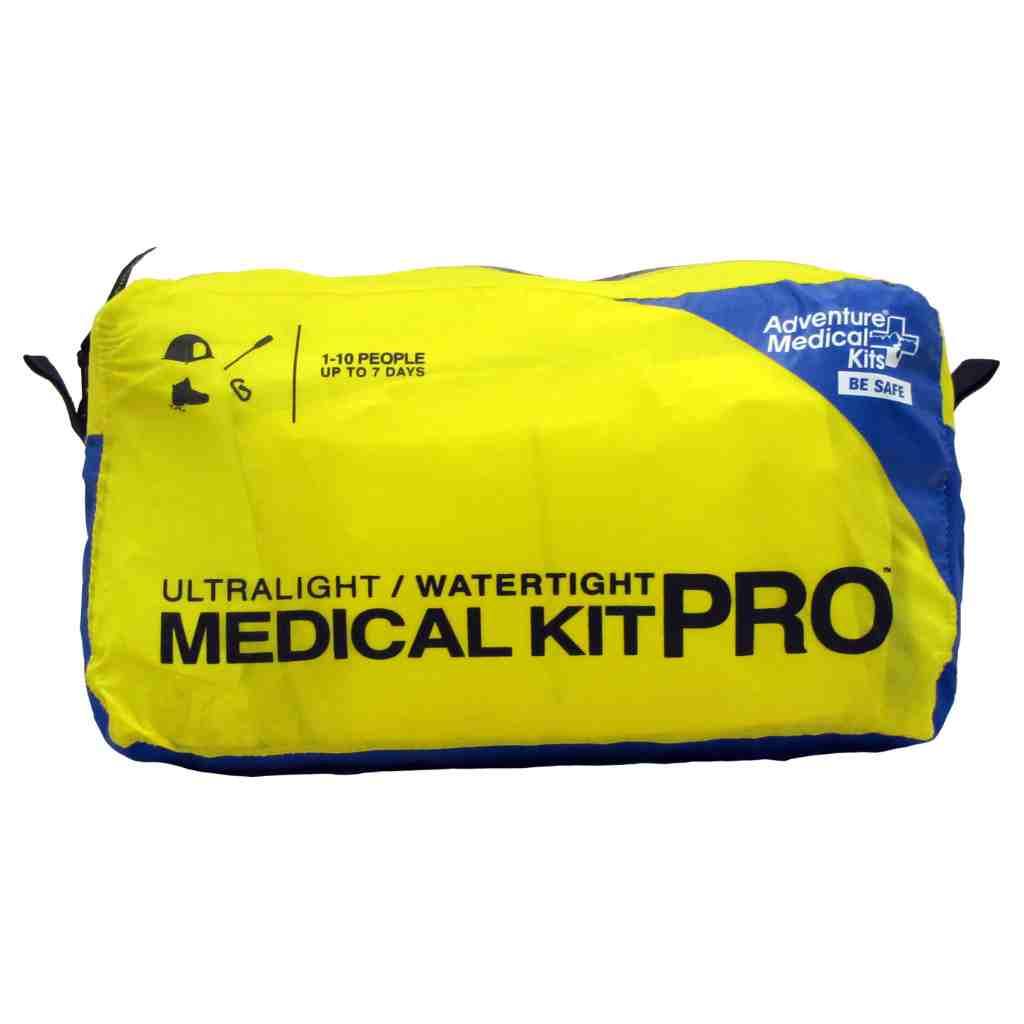
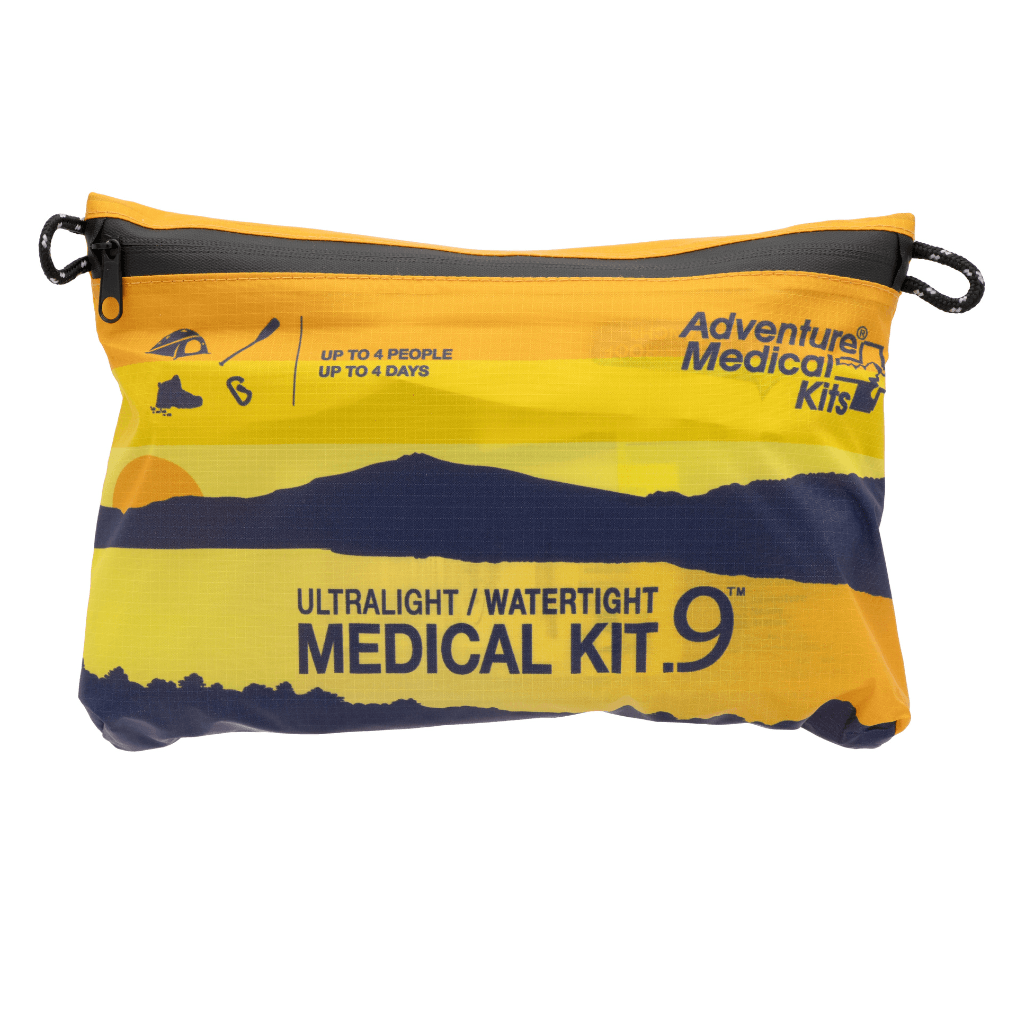
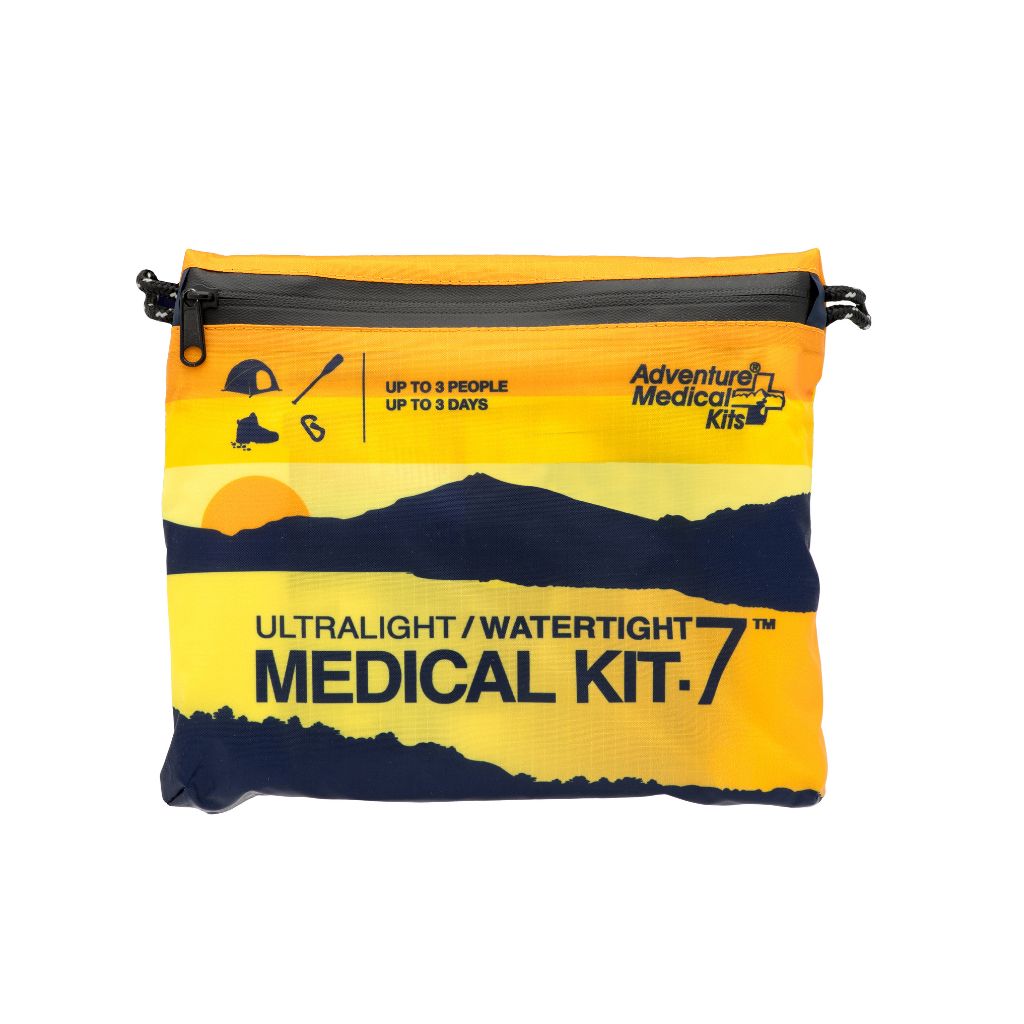
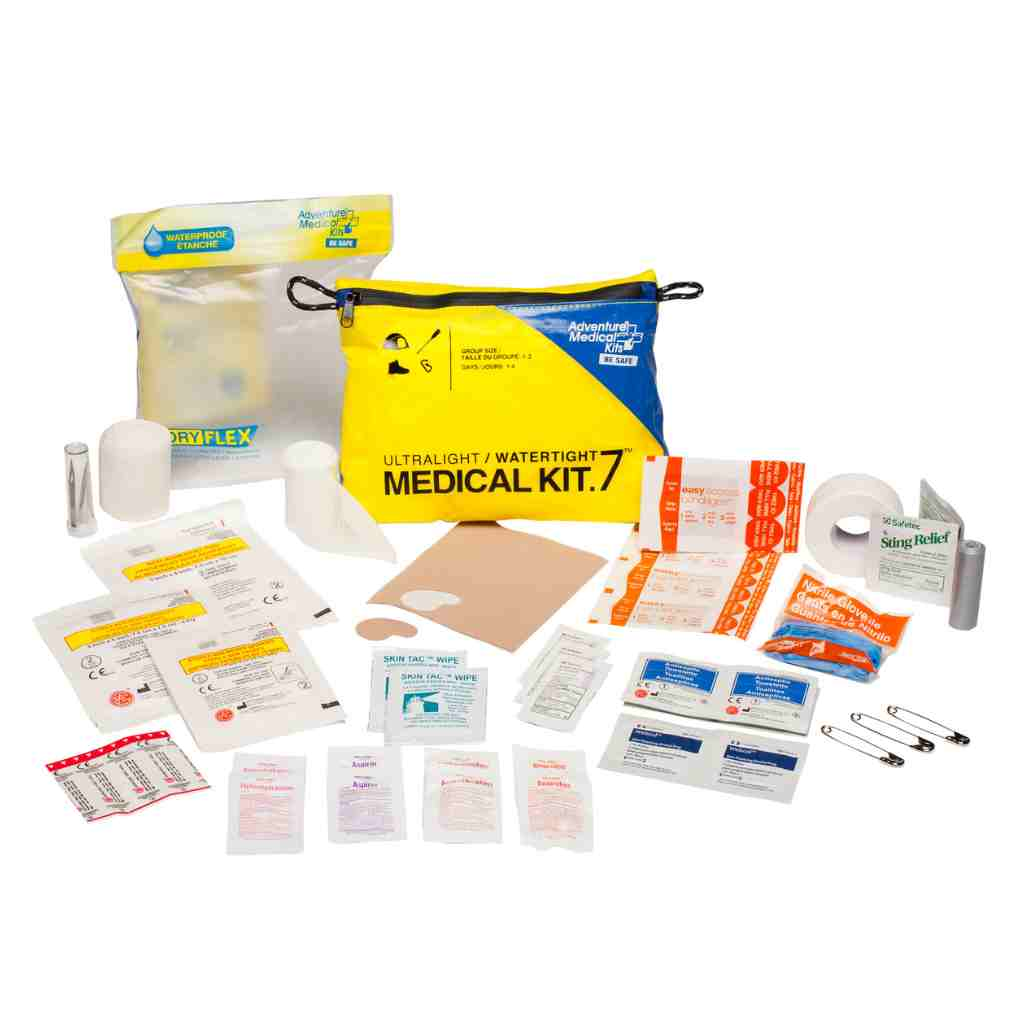
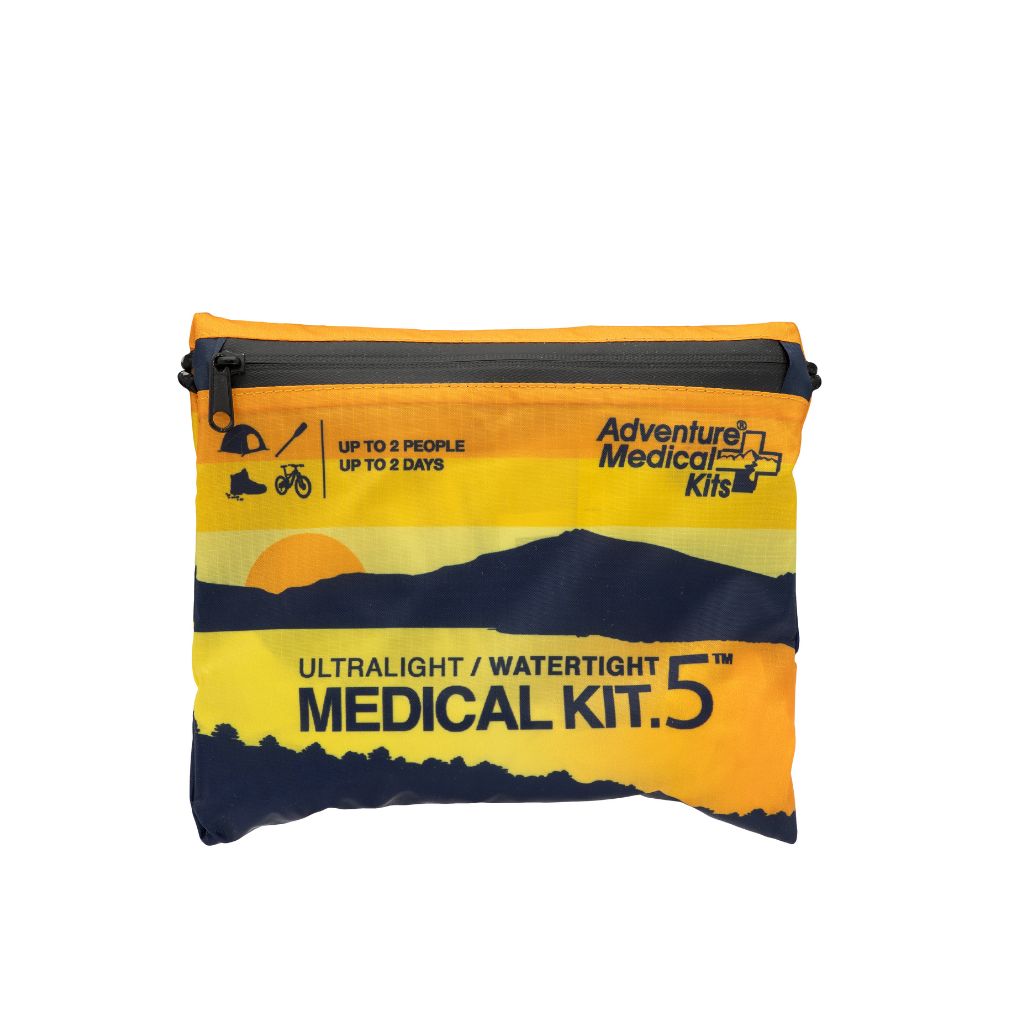
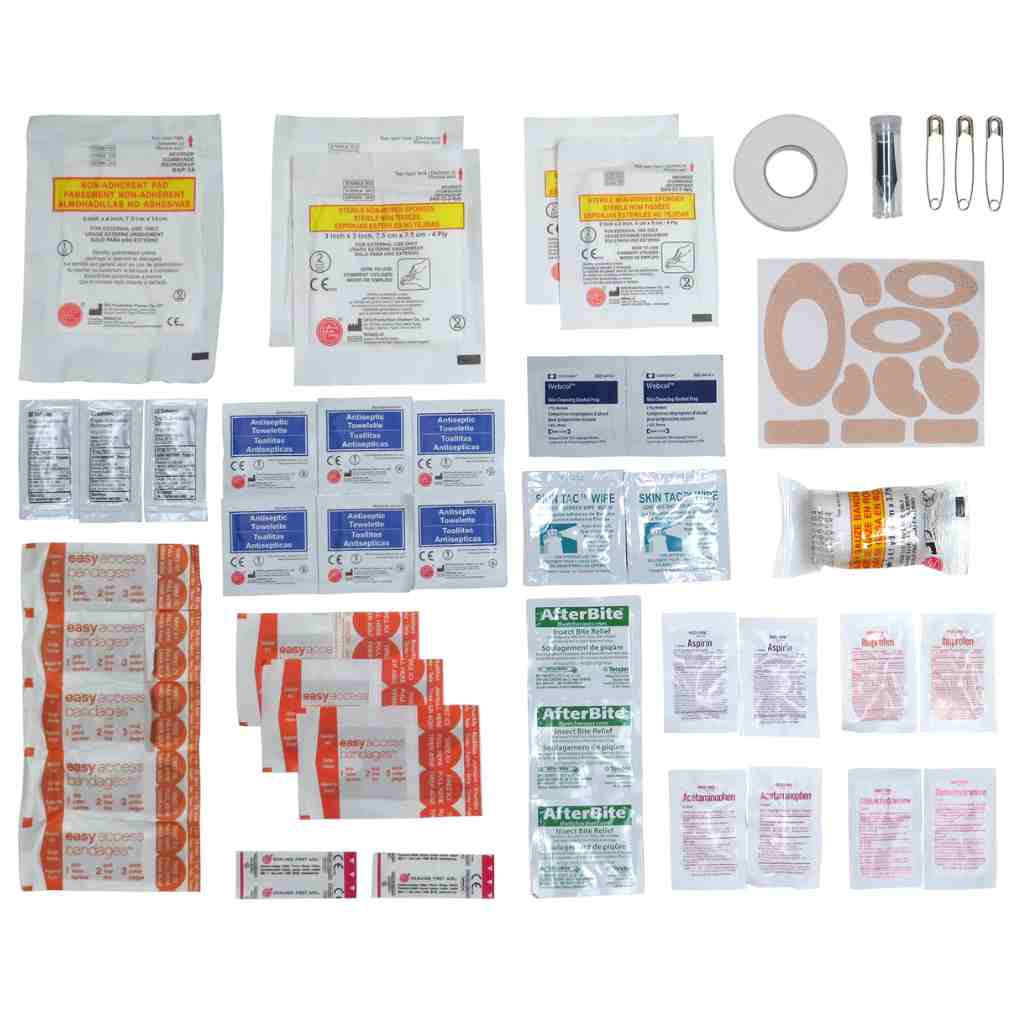
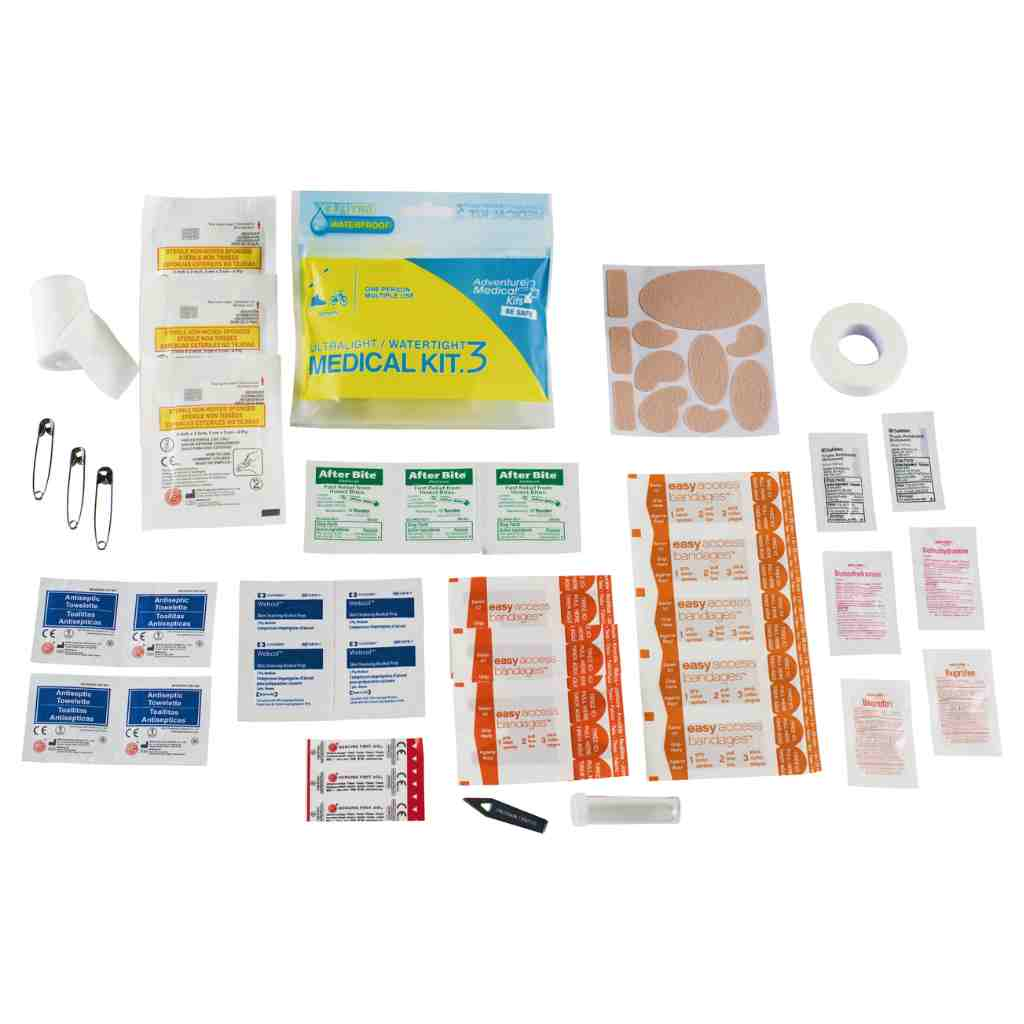
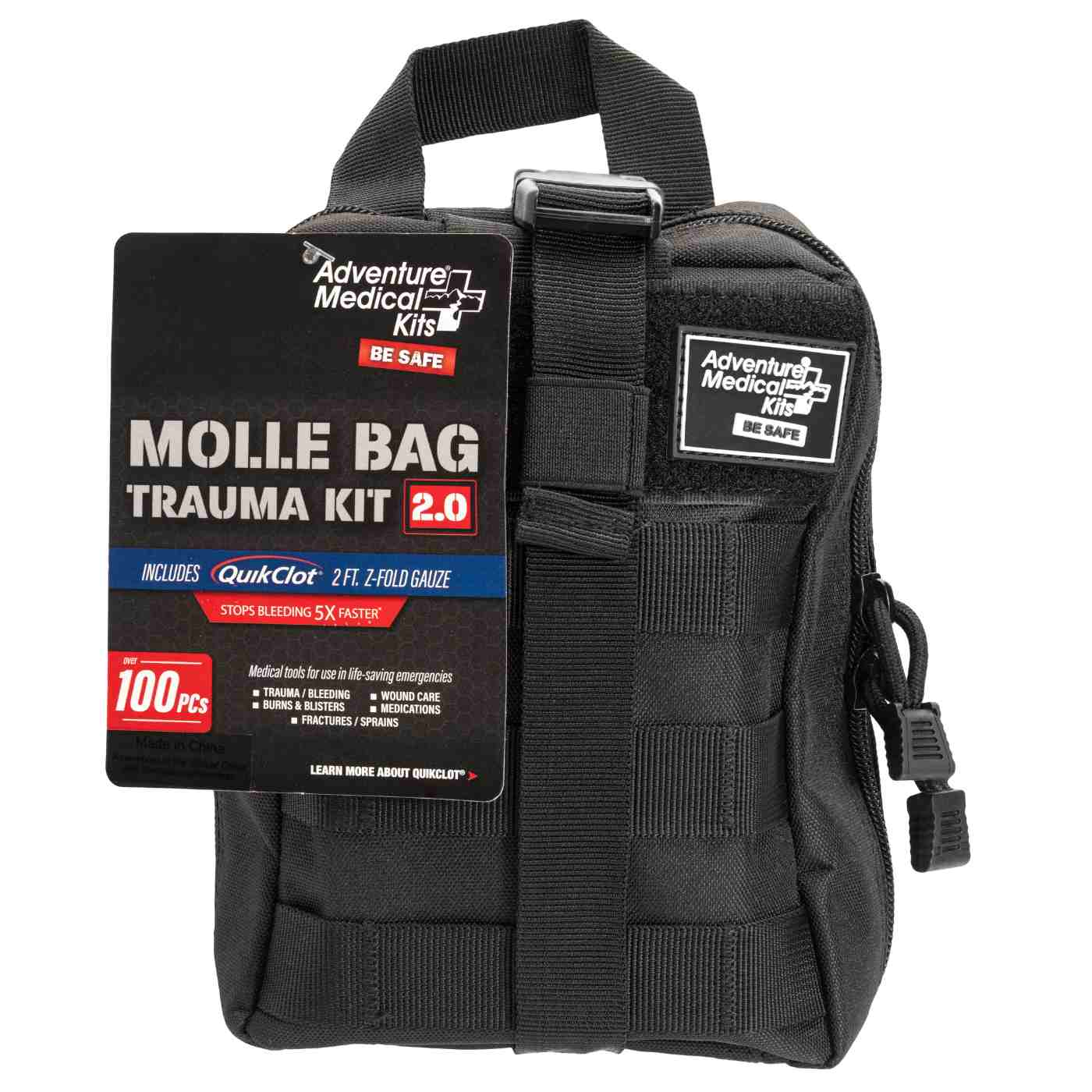
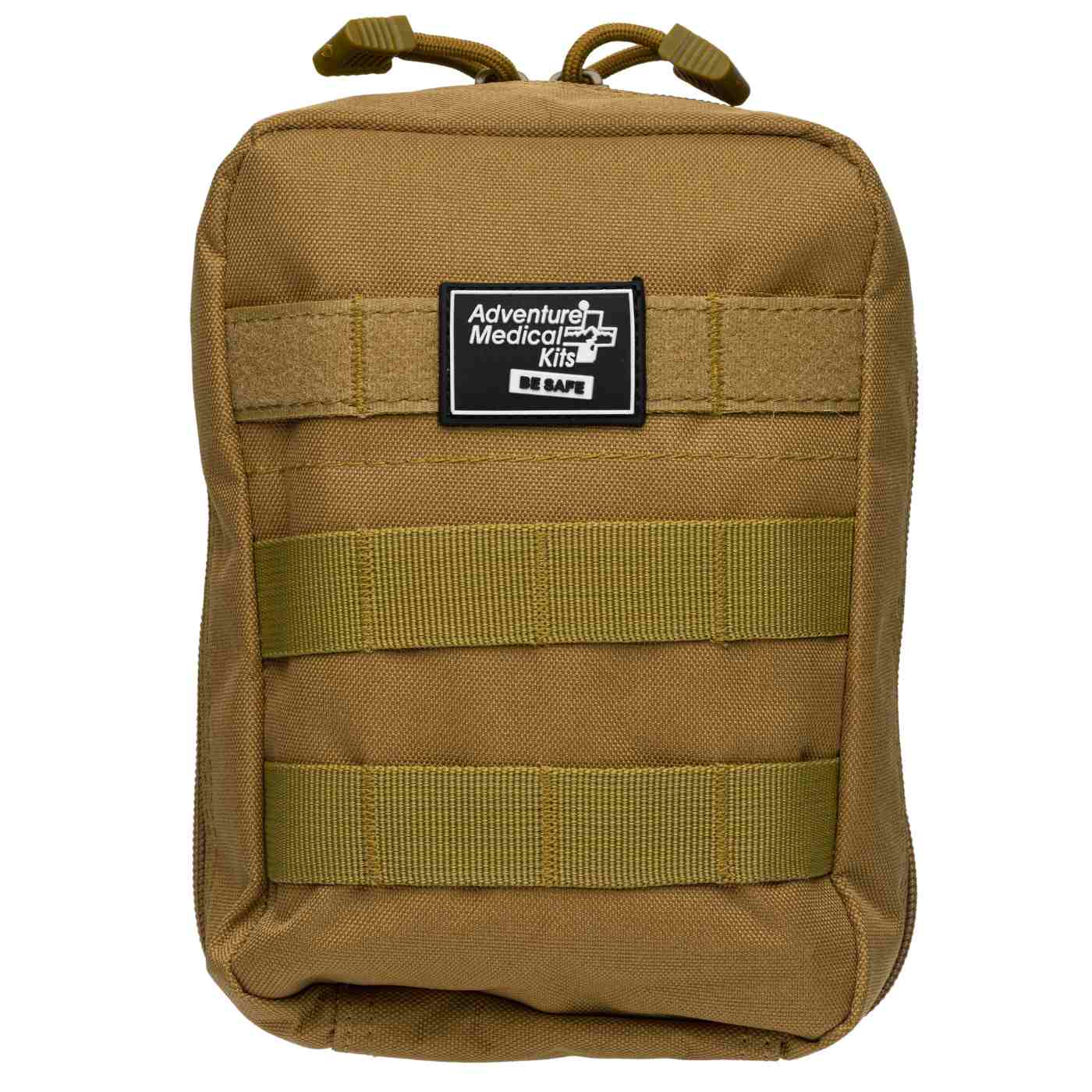
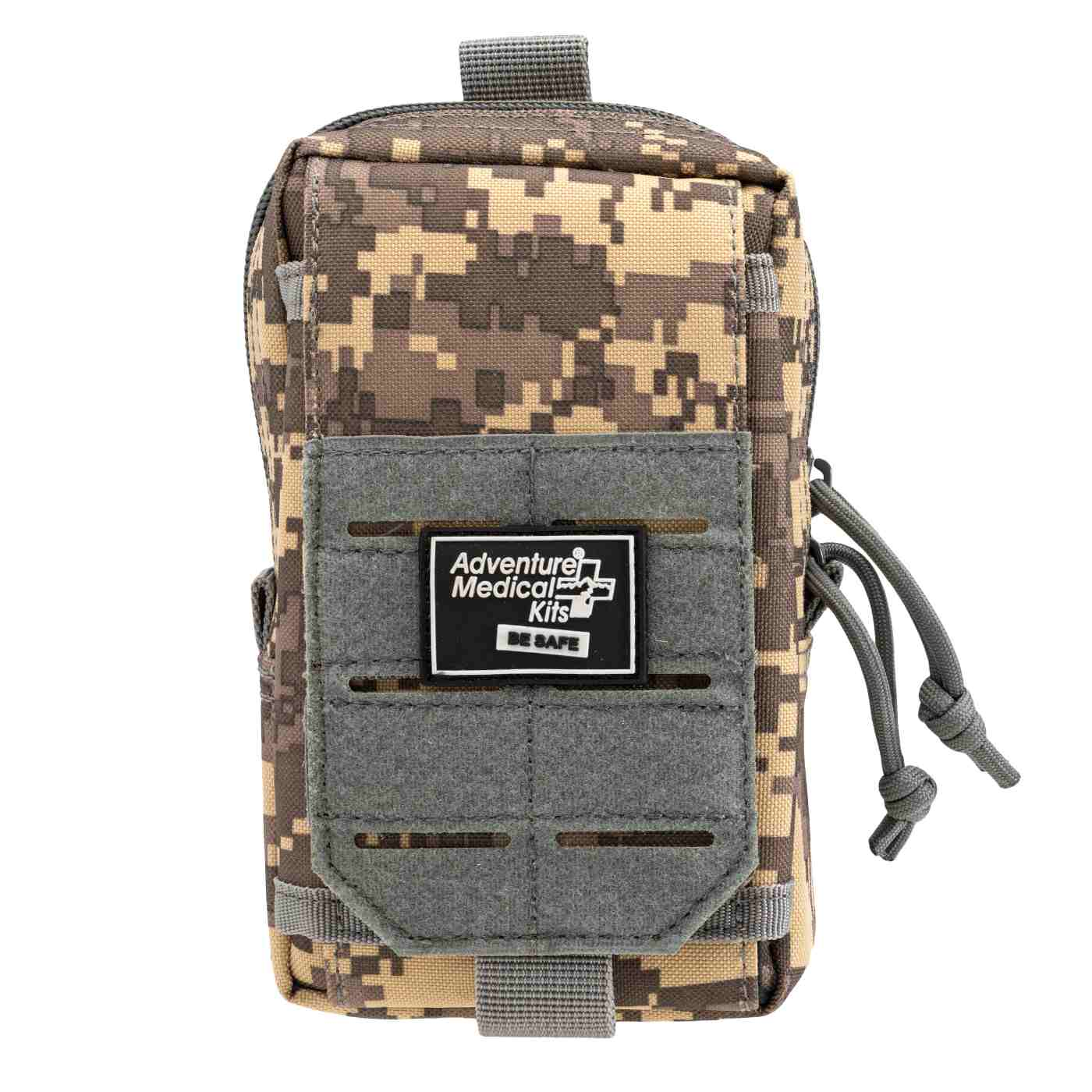
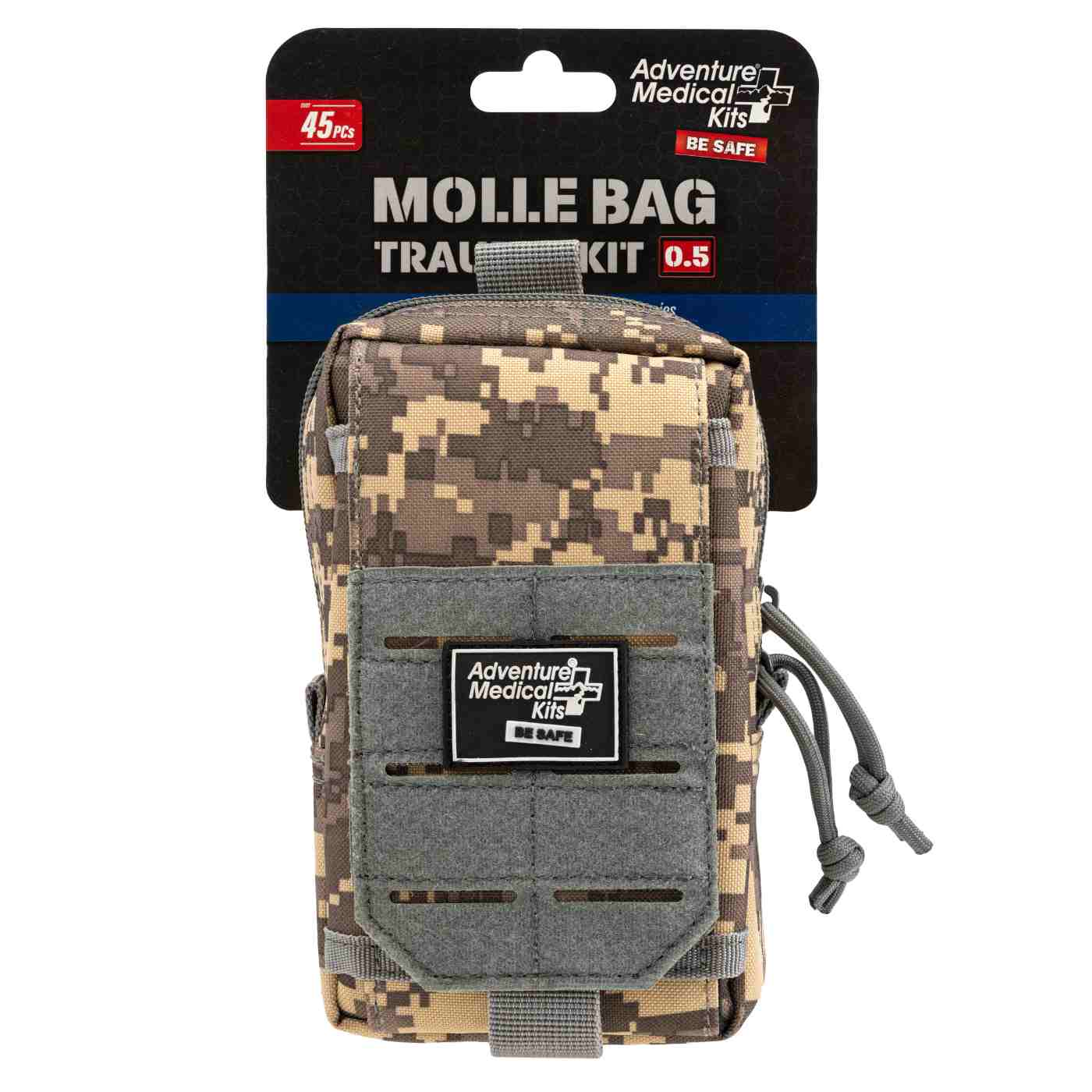
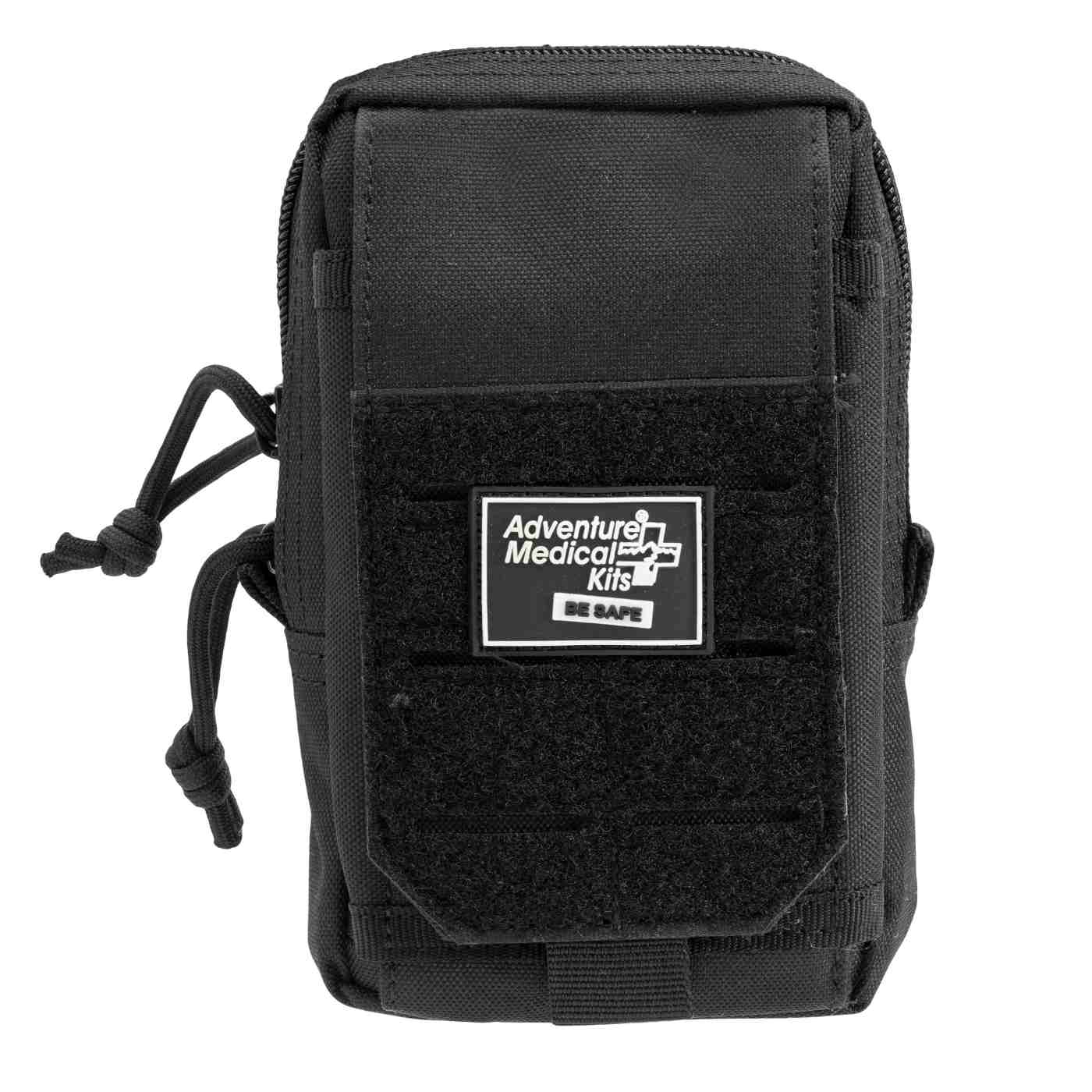
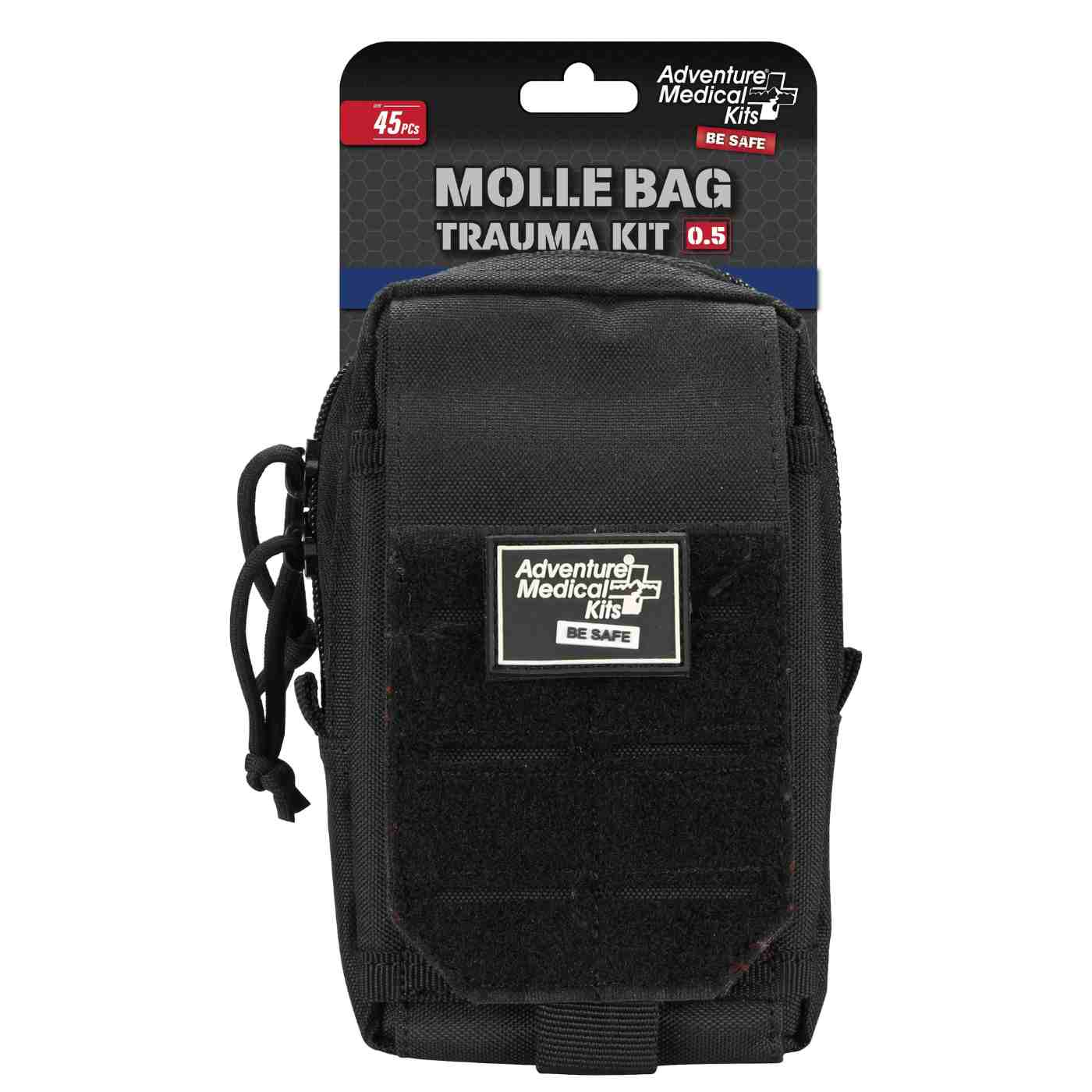
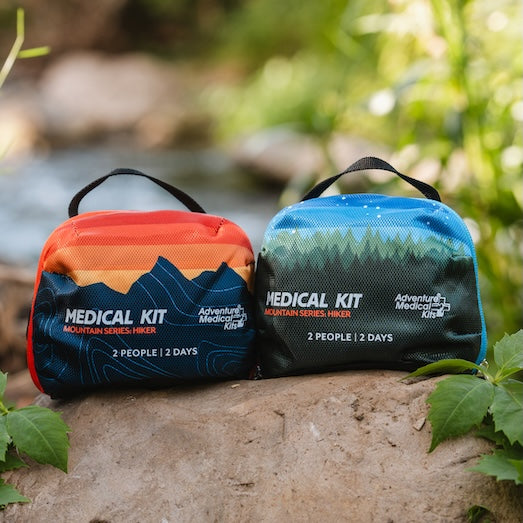
Adventure Medical Kits offers activity-specific medical kits in its Mountain Series and modular trauma-oriented options in its MOLLE series. Their designs emphasize labeled access, included medical instructions, packable construction, and supplies organized for outdoor use, with many kits using resealable waterproof bags. First-aid kits and supplies are also identified as FSA/HSA eligible for purchases made through its site. A buyer comparing these collections should still match the contents to the actual activity and confirm that anyone carrying advanced trauma equipment knows how to use it.
The best survival pack isn't the one with the longest contents list. It's the one that reaches the right injury supplies quickly, survives its storage environment, stays light enough for its role, and gets checked before an emergency exposes its weaknesses.
Adventure Medical Kits provides organized, activity-specific medical kits through the Mountain Series and modular trauma options through the MOLLE series, helping hikers, hunters, travelers, and families build packs around real use rather than marketing claims. Visit Adventure Medical Kits to compare the collections and choose a pack that fits the hazards, carry method, and care needs of the people relying on it.